The question “what is the best wood moisture meter?” comes up for people working in sawmills, joinery shops and industrial drying, and for engineers and managers responsible for energy efficiency and production quality.
In this article we look at why measuring moisture is essential, the main methods available, how the different types of meters compare and, finally, which features define the best equipment for each application.
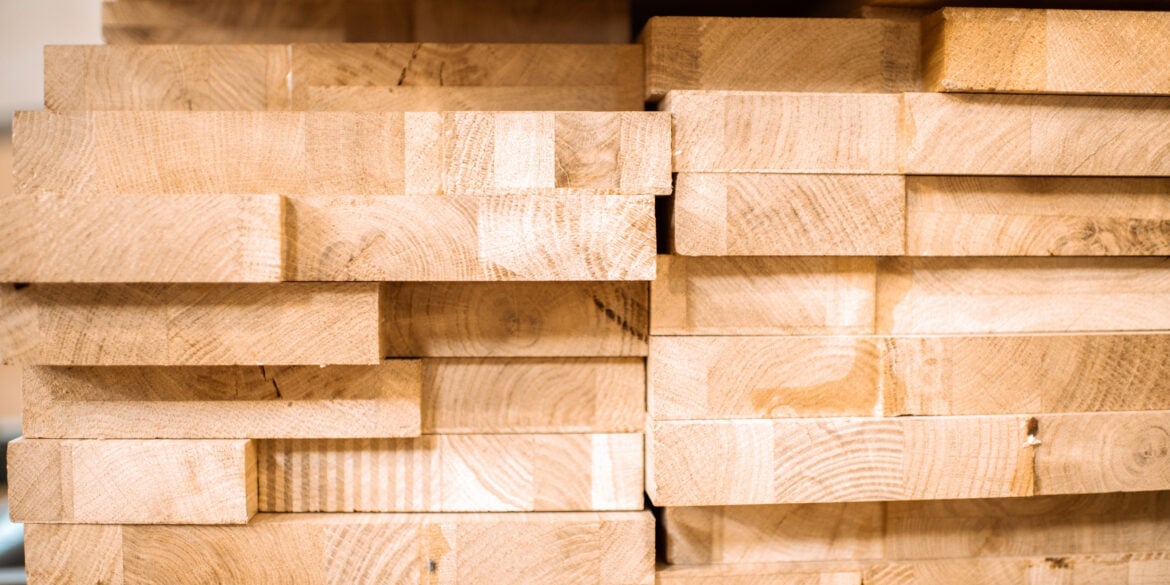
🔎 Why measure wood moisture?
Wood is hygroscopic: it absorbs and releases water depending on its surroundings. Those moisture changes directly affect:
- Structural performance: wood that is too wet can warp, crack and even compromise buildings, furniture or floors.
- Finish quality: excess moisture makes gluing and painting harder.
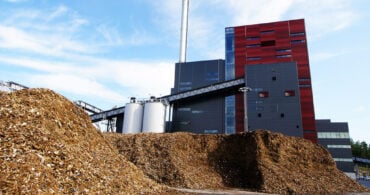
- Energy efficiency: in biomass, a log at 50% moisture has less than half the net calorific value of dry wood.
- Product durability: poorly dried wood is more vulnerable to fungi, termites and early decay.
Brazilian standard ABNT NBR 7190 uses 12% as the reference moisture content for structural timber, the same reference used in European standards such as EN 384. Biomass boilers, on the other hand, typically run on fuel at 20% to 35%.
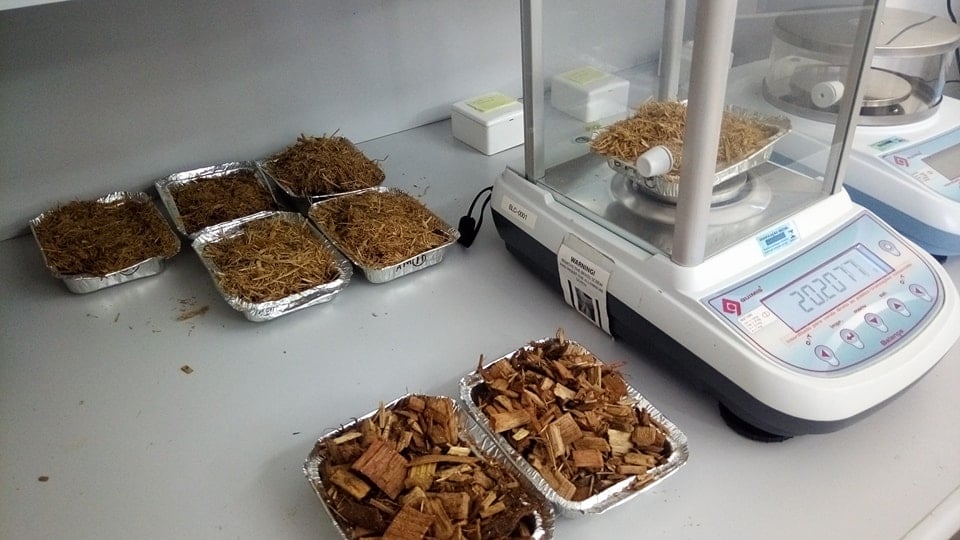
⚙️ Moisture measurement methods
Before choosing the best wood moisture meter, it helps to understand how this variable can be measured:
| Method | Description | Advantages | Limitations |
|---|---|---|---|
| Oven-dry (gravimetric) | The sample is weighed, dried in an oven and weighed again (ASTM D4442 / EN 13183-1). | The reference method, with very high accuracy. | Slow, destructive and impractical in production. |
| Electrical resistance (pin) | Measures resistance between electrodes driven into the wood. | Affordable, practical meters. | Readings vary with temperature and mineral salts. |
| Dielectric/capacitive | Measures the wood’s dielectric constant through surface contact. | Non-destructive, fast and portable. | Can be affected by wood density. |
| Continuous sensors | Fixed equipment in kilns or on conveyors. | Real-time monitoring. | Higher investment and calibration required. |
📊 Types of meters on the market
Modern meters range from tools for simple spot checks to complete plant-wide monitoring.
1. Pin meters (resistance)
These use electrodes driven into the wood to measure electrical resistance: the higher the moisture, the lower the resistance. They are widely used for their simplicity and speed, but they have to penetrate the material, which can damage finished surfaces, and the reading is limited to the depth the pins reach.
2. Pinless meters (dielectric or capacitive)
These use electromagnetic waves to estimate moisture content through surface contact, without damaging the wood. They are ideal for fast, accurate readings over large areas or on delicate materials and, depending on the model, also reach the inside of the piece.
3. Infrared meters
Less common for wood, these capture the infrared radiation reflected by water in the material. They are used more in construction and agriculture, with limited use on wood because they depend on the surface and its emissivity.
4. Oven-dry method (gravimetric)
The traditional method: the sample is weighed before and after oven drying, and moisture content is calculated from the difference in mass. Although highly accurate, it is impractical for routine checks because it is destructive and slow.
5. Benchtop or laboratory meters
More sophisticated, usually stationary versions with high accuracy, suited to lab quality control but less practical on the shop floor.
6. TDR (time-domain reflectometry) sensors
An advanced technique in which an electrical pulse travels along a rod inserted into the material; the reflection time varies with moisture content. It measures along the full length of the sensor, producing a moisture profile. It is used in research, in large timber sections and in continuous structures.
This variety shows that “what is the best wood moisture meter?” has no single answer: it depends on the type of wood and the purpose of the measurement.
💡 How to choose the best moisture meter
A few criteria help guide the decision:
- Accuracy and reliability: the meter must deliver consistent results.
- Measurement depth: in dense pieces, a surface reading may not reflect the true moisture.
- Portable vs. continuous monitoring: in small sawmills portability is essential; in larger plants, fixed sensors with integrated software make the difference.
- Data integration: reports, charts and export to Excel or ERP are important differentiators.
- Ruggedness: instruments must withstand the production environment, with dust, temperature swings and constant handling.
📌 Where Marrari meters fit in
Marrari Automação develops equipment for different stages of the production chain:
- M51: portable and easy to use, ideal for quick checks when wood arrives.
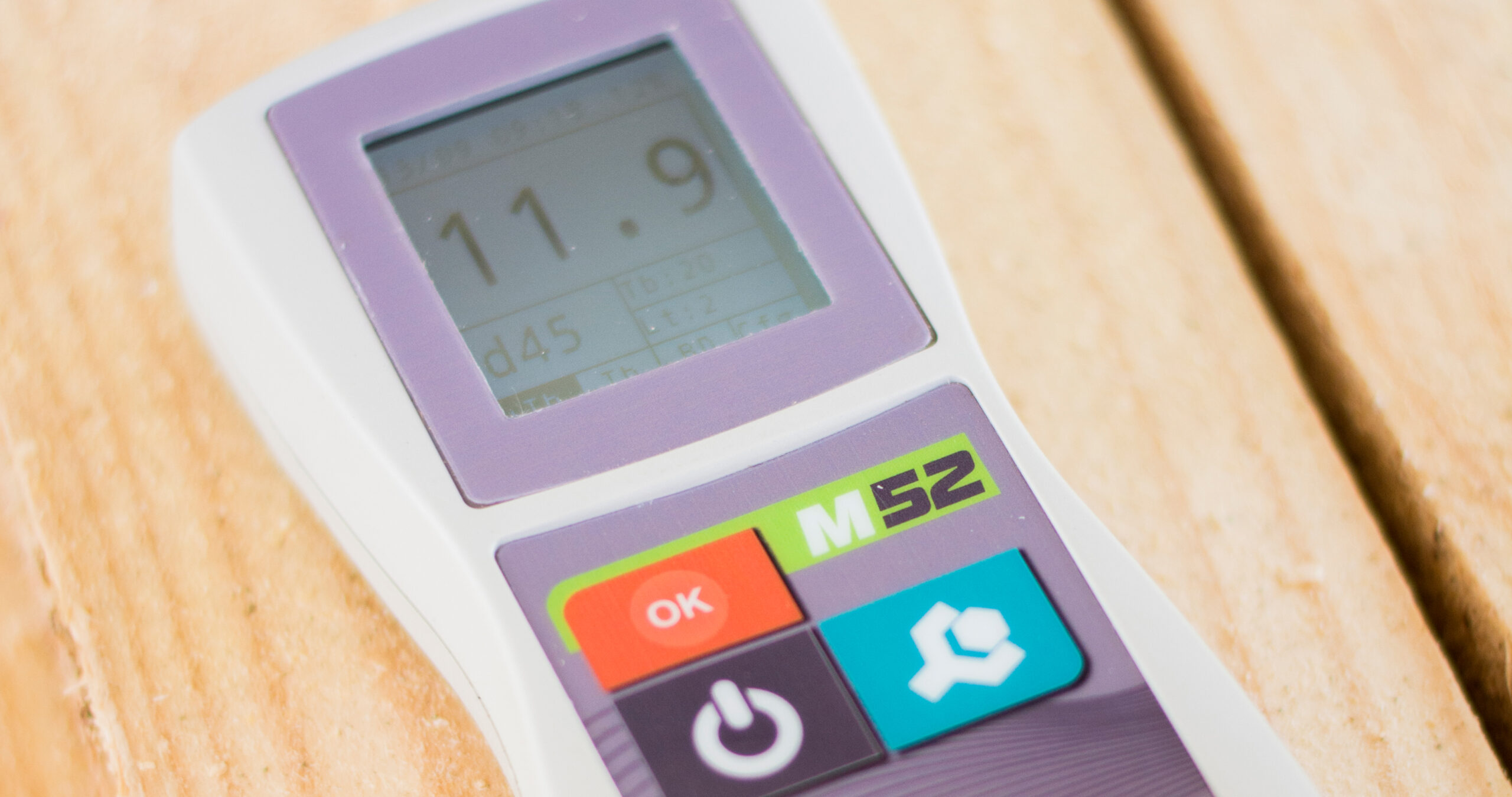
- M52: portable, with data storage to track moisture by lot.
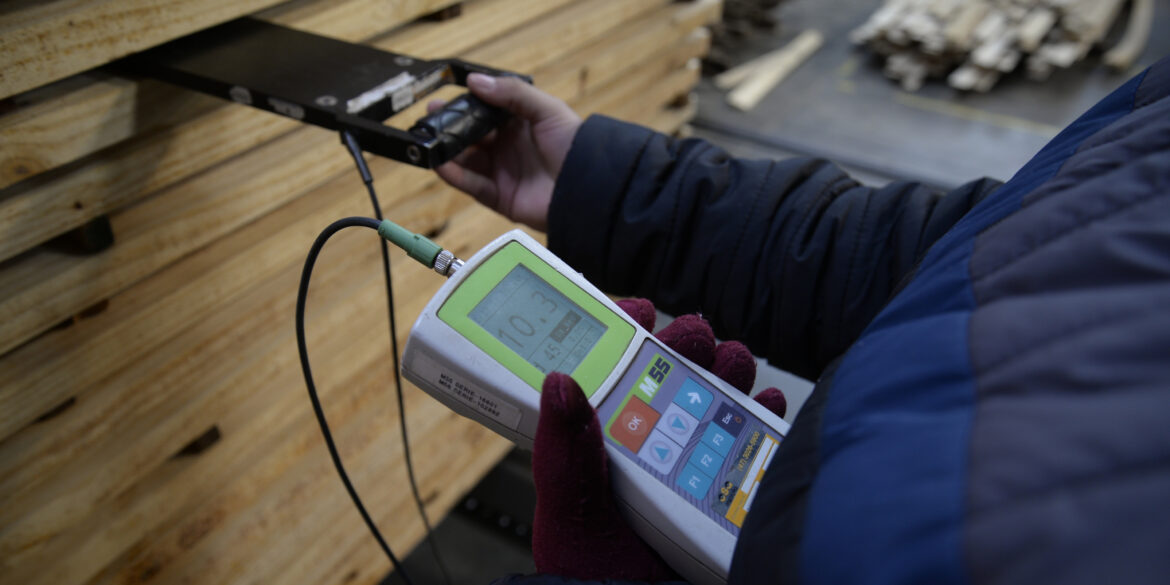
- M55-56 Sword: designed to measure inside lumber packs and pallets, for more representative average values.
- M65 UmiLog: specialized for logs and firewood, essential for biomass and energy processes.
These meters combine industrial ruggedness, accuracy and digital integration, which has made Marrari a reference in the sector. Most importantly, each model meets a specific need: there is no single “best meter”, only the right one for each application.
✅ Conclusion
Answering “what is the best wood moisture meter?” means understanding the production process, what the wood will be used for and the technologies available.
- If speed is the priority, portable meters are the best choice.
- If traceability and quality management matter most, models with data logging come into play.
- If you need to measure inside dense pieces or logs, solutions with specific probes and sensors are essential.
Today’s technology lets companies cut waste, improve energy efficiency and raise final product quality. In that context, Marrari’s meters are a strong choice because they combine accuracy, durability and digital integration, turning moisture measurement into a real competitive advantage.
Want to apply this in your plant?
Talk to a Marrari specialist on WhatsApp or see the right solution for your process.