Knowing how to calculate a biomass boiler’s cost per hour is one of the most important, and most overlooked, questions in industrial plant management. If your answer to that number is still “roughly” or depends on an estimate at month-end close, this article is for you.
In industrial plants that burn biomass, the boiler’s cost per hour is one of the largest components of production expenses. Even so, few companies track this number rigorously. The consequence is direct: poorly founded purchasing decisions, below-standard fuel going into the furnace and inefficiencies that quietly pile up month after month.
In this article, we show how to calculate a biomass boiler’s operating cost per hour, which variables affect it most and why monitoring biomass moisture, density, volume and weight is not just a technical matter: it is a financial decision.
Boiler cost per hour: why price per ton is not enough
The biomass market usually trades per ton or per cubic meter. That number is visible, comparable and easy to use in purchasing spreadsheets. The problem is that it says nothing about what you are actually burning.
Two loads with the same weight can have completely different energy costs depending on biomass moisture. Ignoring this is a strategic mistake, and an expensive one.
The number that really matters for operations is: how much you pay per megawatt-hour (MWh) generated, or per ton of steam produced. That is your boiler’s true cost per hour.
Without it, comparing suppliers becomes guesswork, and cutting costs becomes trial and error.
How to calculate a biomass boiler’s cost per hour
The basic formula for the boiler’s operating cost starts with fuel consumption:
Biomass consumption (t/h) = [Steam flow × (Steam enthalpy – Feedwater enthalpy)] ÷ (Net calorific value × Boiler efficiency)
From hourly biomass consumption, the cost per hour is:
Cost per hour = Biomass consumption (t/h) × Biomass price (per t)
Simple in theory. In practice, every variable in this formula may be poorly measured, and as a result the real cost per hour of your boiler ends up very different from what the financial spreadsheet shows.
Take a typical 10 t/h industrial steam boiler, producing the same amount of steam in both scenarios (figures in Brazilian reais, R$):
| Parameter | Scenario A: dry biomass | Scenario B: wet biomass |
|---|---|---|
| Biomass moisture | 20% | 45% |
| Net calorific value (kcal/kg) | 3,400 | 2,050 |
| Boiler efficiency | 82% | 72% |
| Biomass consumption (t/h) | 1.85 t/h | 3.49 t/h |
| Biomass price (R$/t) | R$ 180.00 | R$ 155.00 |
| Cost per hour | R$ 333.00 | R$ 540.95 |
| Cost per day (20 h of operation) | R$ 6,660.00 | R$ 10,819.00 |
| Cost per month (30 days) | R$ 199,800.00 | R$ 324,570.00 |
The biomass that was cheaper per ton cost R$ 124,770.00 more per month. That is the effect of buying on invoice price rather than on the cost of the energy delivered.
The calorific values used in this example come from Brazilian technical literature. For eucalyptus, Foelkel uses 4,400 kcal/kg for oven-dry wood and publishes net calorific values of about 3,400 kcal/kg at 20% moisture, 2,400 kcal/kg at 40% and 2,050 kcal/kg at 45% (FOELKEL, Celso. Eucalyptus Newsletter, 2016, in Portuguese). A practical approximation that reproduces these values is NCV ≈ 4,400 × (1 – M) – 600 × M, with M as a fraction on a wet basis; the 600 × M term roughly represents the energy spent evaporating the water. This means a load of wood chips at 40% moisture delivers 45.5% less energy per kilogram than the same chips fully dry.
To learn more about how moisture directly affects your biomass’s calorific value, read: how to calculate the calorific value of biomass.
The four variables that set a biomass boiler’s cost per hour
1. Moisture: the biggest driver of boiler cost per hour
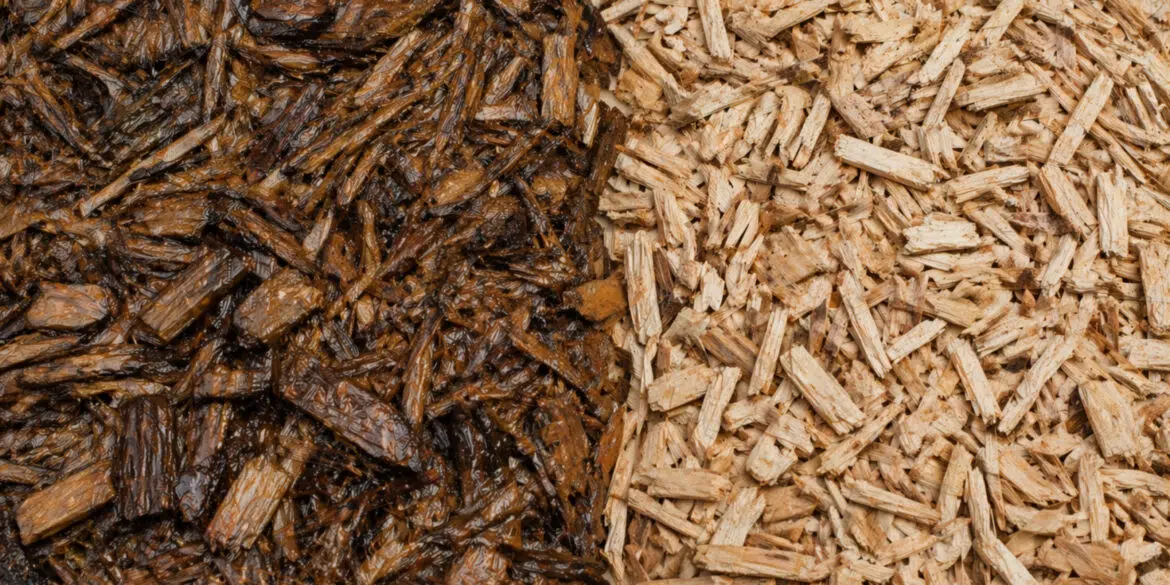
Moisture is the single variable with the greatest impact on boiler energy efficiency. Each 1% increase in fuel moisture causes roughly a 0.5% loss in efficiency, because heat is wasted evaporating water instead of producing useful steam (coalbiomassboiler.com, 2025). Combining the drop in calorific value with the loss of efficiency, every 10 percentage points of extra moisture raises wet biomass consumption by roughly 20% to 40% for the same steam output, as the table below shows.
| Moisture (%) | Estimated net calorific value (kcal/kg) | Typical boiler efficiency | Relative biomass consumption (same steam output) |
|---|---|---|---|
| 15% | 3,650 | 84–88% | Baseline (100%) |
| 25% | 3,150 | 80–84% | +22% |
| 35% | 2,650 | 76–80% | +52% |
| 45% | 2,150 | 70–75% | +101% |
| 55% | 1,650 | 65–70% | +182% |
Net calorific value calculated with the approximation above (Foelkel publishes 2,050 kcal/kg at 45%, within a range of 1,950 to 2,150). Relative consumption calculated with efficiency at the midpoint of each range. Efficiency data: ResearchGate, 2020; coalbiomassboiler.com (2025).
Experimental studies of 22 wood chip boilers in Serbia found that, with moisture between 19.21% and 38.23% and net calorific values between 10,177 and 14,139 kJ/kg, boiler thermal efficiency ranged from 88.78% to 94.06% (ResearchGate, 2020). Even within a “reasonable” moisture range, performance varies significantly.
Continuous, real-time moisture measurement at the boiler feed point, not just a sample at receiving, is what lets you act before inefficiency sets in. Marrari’s UmiChip in-line biomass moisture meter takes this reading second by second directly on the conveyor and calculates net calorific value in real time.
2. Bulk density: the data the invoice does not give you
Biomass bulk density tells you how much mass there is in each cubic meter conveyed. This matters because boilers are often fed by volume: conveyors, drag chains and screws dose in m³/h, not t/h.
If density varies, the mass of biomass delivered to the boiler varies too, without the operator noticing, and the boiler’s cost per hour rises with no visible alarm on the panel.
In a study in Paraná, Brazil, eucalyptus chips produced from whole trees had an average moisture of 36.4% and a bulk density of 361 kg/m³, while pine sawmill residue reached 47% moisture and only 229 kg/m³ (CORRADI, 2021, UNIOESTE). Compare two batches fed on the same conveyor at a volumetric flow of 5 m³/h:
| Biomass type | Density (kg/m³) | Moisture | Mass delivered (kg/h) | Dry mass delivered (kg/h) |
|---|---|---|---|---|
| Eucalyptus chips (whole trees) | 361 | 36% | 1,805 | 1,155 |
| Pine sawmill residue | 229 | 47% | 1,145 | 607 |
With the same volume fed, the second case delivers 47.4% less dry mass, and therefore much less energy. Steam pressure and temperature drop, and the operator often raises the feed rate without understanding the root cause.
If you need to measure moisture and density at the same time, at receiving or in the process, Marrari’s M75D takes both readings with high accuracy and even calculates the net calorific value of the material, so you can assess the real energy value of each load before it reaches the boiler.
3. Volume and weight: no real measurement, no reliable cost per hour
One of the most basic, and most expensive, mistakes is not measuring the weight and volume of incoming biomass accurately. At many industrial plants, receiving is still manual or based only on the supplier’s invoice.
Receiving biomass on the invoice alone, without independent weighing, exposes the operation to two risks at once: paying for more material than was delivered and not knowing the real energy density of what was bought.
The energy you buy per cubic meter of fuel rises as dry matter per cubic meter increases and moisture falls. The dry matter content of wood chips varies considerably, depending on basic density and the solid volume of the chips (woodenergy.ie). Buying biomass by the m³ without knowing its density is buying uncertainty.
To see the real weight of this imprecision: at mid-sized plants, a variation of just 2 percentage points in moisture over the day, from 43% to 45%, already adds about 700 tons of biomass consumed per year without producing a single extra ton of steam (Marrari, 2023, in Portuguese).
4. Particle size
Although it is not the main focus here, particle size also affects cost per hour. Oversized particles cause incomplete combustion and unburned char. Very fine particles cause handling problems and explosion risk. Uniform particle size ensures stable feeding and proper distribution of combustion air, keeping efficiency within the design range.
Boiler cost per hour and the financial impact on maintenance
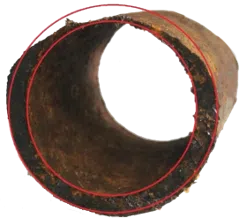
Energy inefficiency caused by off-spec biomass is not limited to extra fuel consumption. It also shows up as faster wear, unplanned shutdowns and shorter equipment life, all hidden components of your boiler’s cost per hour.
Excessively high moisture can cause tar to build up on heat exchanger surfaces and damage fans and flue gas cleaning equipment. On the other hand, moisture below the combustion chamber’s design value can cause overheating, clinker formation and costly repairs (Ranheat Engineering, 2025).
The main damage mechanisms are:
Fouling and tube deposits: unburned particles build up on heat transfer surfaces, forming insulating layers that raise flue gas temperature and require more fuel to keep steam output. If they are not removed regularly, deposits lead to metal overheating, slagging and mechanical failures.
Slagging and clinker formation: biomass rich in alkali metals such as potassium and sodium lowers the ash melting point, creating conditions for hard, insulating deposits on heat transfer surfaces (Heatmanage.com, 2025).
Unplanned shutdowns: fluctuations in moisture and calorific value can happen not only from day to day but from hour to hour, directly affecting combustion stability. Unplanned downtime is, on its own, the biggest threat to operating profitability.
| Consequence of off-spec biomass | Estimated financial impact |
|---|---|
| Extra fuel consumption (moisture 10 percentage points higher) | +20% to +40% biomass consumption |
| Extra tube cleaning due to faster fouling | Additional 4–8 h of downtime per month + labor |
| Early refractory replacement | 2 to 4 years earlier (cost: R$ 80,000 to R$ 250,000) |
| Damage to feed system components | +R$ 15,000 to R$ 60,000/year at mid-sized plants |
| 24-hour unplanned shutdown | Often more than the annual maintenance cost |
Maintenance typically accounts for 5% to 8% of capital cost per year for biomass boilers. Over a 20-year service life, total maintenance costs can range from US$ 300,000 to more than US$ 800,000, equal to or higher than the original equipment investment (coalbiomassboiler.com, 2025). Operating and maintenance costs 20% to 30% higher are typical with high-moisture, high-ash or inconsistently sized fuel.
The hidden cost of variation between biomass batches
One often overlooked point is that biomass characteristics are not static. The same supplier may deliver batches with moisture anywhere from 25% to 55%, depending on the season, storage conditions and species.
At heat plants in Latvia, wood chip analysis over a season showed moisture ranging from 25% to 58% between samples, and ash content from 2.5% to 5.2%. High moisture lowers net calorific value more than high ash does, and higher levels of both increase plant operating costs (IITF/LBTU, 2021).
When the boiler does not know what it is receiving at any given moment, feed adjustment is reactive: the operator notices steam pressure dropping and increases the feed rate. The result is excessive biomass consumption, process instability and faster equipment wear. Most automation systems cannot react to rapid moisture changes without accurate, real-time input.
Read more about structuring raw material quality control: continuous measurement of wood chips and biomass with DensiDry.
How to monitor boiler cost per hour in real time
To calculate and control boiler cost per hour accurately, you need four pieces of information collected continuously:
1. Weight of biomass fed (kg/h or t/h): without real weighing, consumption is an estimate. The invoice is not operational data.
2. Real-time moisture (%): the variable with the greatest impact on boiler cost per hour. One spot measurement per shift is not enough if the batch varies during the day.
3. Volume and bulk density (m³/h and kg/m³): these let you calculate the dry mass actually delivered to the furnace. Without them, a volumetric feed rate does not represent the energy delivered.
4. Calorific value calculated instantly: with moisture and density known, net calorific value can be calculated at every measurement cycle, allowing continuous adjustment of the feed rate and air/fuel control.
With these four data points integrated, managing boiler cost per hour stops being a monthly estimate and becomes a real-time operating indicator. To see how boiler automation can use this data to act on combustion, take a look at EcoSteam, Marrari’s industrial boiler automation system, which uses moisture and volume readings to adjust combustion parameters automatically and reports tons of biomass per ton of steam in real time.
DensiDry: one dashboard for real-time boiler cost per hour
More advanced operations already use in-line measurement systems to bring these variables together in a single interface, with no need to cross-check data from different sources by hand.
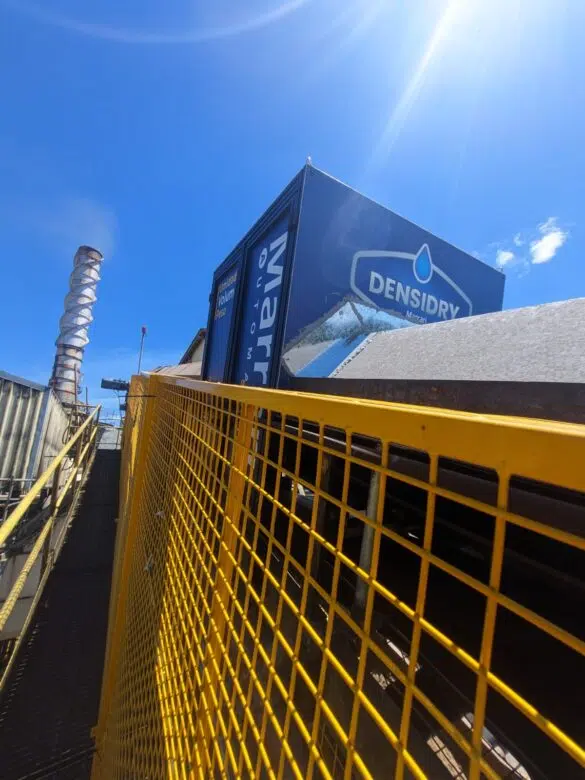
Marrari’s DensiDry was developed for exactly this purpose. Installed directly over conveyors, it measures biomass moisture, bulk density, volume and weight continuously and simultaneously.
With this data, you can track the instantaneous calorific value of every load entering the boiler, adjust the feed rate automatically as density and moisture change, and anticipate thermal swings before they affect steam pressure and temperature. The data can be integrated into the plant’s automation system, exported to reports and viewed on dashboards and mobile apps.
The difference is consolidation: instead of standalone sensors whose data must be cross-checked by hand, DensiDry delivers the four critical variables on a single screen, with full traceability by supplier, date, shift and load.
If you manage biomass boilers and do not yet have this data in real time, it is worth assessing precisely how much that gap is costing you.
Conclusion: what you do not measure, you cannot control, and you pay for it
The biomass boiler cost per hour equation is straightforward. But it can only be solved accurately when the inputs are truly known: not by estimate, not by a spot sample at receiving and not by the supplier’s invoice.
Biomass moisture, density, weight and volume are not secondary operating data. They are the variables that determine whether your boiler runs at 72% or 86% efficiency. At a plant running 20 hours a day, the difference between those two points can exceed R$ 100,000 per month without anyone realizing there was a problem.
The first step to controlling boiler cost per hour is simple: measure what you are burning, not just what you bought.
If you would like a no-obligation technical assessment of your process, contact the Marrari team and request a biomass and boiler diagnostic, with an analysis of efficiency, consumption and optimization opportunities specific to your plant.
Want to apply this in your plant?
Talk to a Marrari specialist on WhatsApp or see the right solution for your process.
Technical references:
- FOELKEL, Celso. Eucalyptus Newsletter: eucalyptus.com.br, 2016 (in Portuguese).
- CORRADI, G. M. Qualidade Energética de Diferentes Biomassas: UNIOESTE, 2021 (in Portuguese).
- Influence of Moisture Content in Wood Chips on the Boiler Operation: ResearchGate, 2020.
- Influence of Wood Chip Quality on Boiler House Efficiency: IITF/LBTU, 2021.
- List and Values of Wood Fuel Parameters: woodenergy.ie
- Industrial Biomass Boiler Efficiency Factors: coalbiomassboiler.com, 2025.
- Upfront and Long-Term Costs of an Industrial Biomass Boiler: coalbiomassboiler.com, 2025.
- Leveraging Acospector for Predictive Boiler Maintenance: heatmanage.com, 2025.
- Wood Chip Boiler: Ranheat Engineering, 2025.