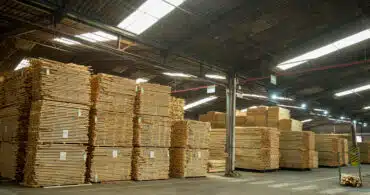

Greater efficiency in production and resource use has become a priority across many sectors, including the timber industry. Sawmills face specific productivity and energy consumption challenges, but they also have the chance to adopt more efficient and sustainable practices. In this article we share six essential tips to improve production and energy efficiency in a sawmill, from upgrading equipment to industrial automation, to optimize processes, reduce waste and run a more profitable, sustainable and competitive operation.

6 tips to improve sawmill efficiency
Here are some essential tips to achieve greater production and energy efficiency in your sawmill:
- Upgrade your equipment: Investing in modern, efficient machinery brings several advantages. Newer machines are usually designed to use less energy, which saves money in the long run. They also tend to include automation and technologies such as sensors and control systems that optimize production, shorten cycle times and minimize waste.
- Carry out regular maintenance: Proper maintenance is essential to keep machines running at their best. Schedule regular inspections to find and fix problems before they get worse. Cleaning, lubrication and replacing worn parts are a key part of preventive maintenance. Train operators to do basic routine checks and report any issues. This maintenance is much easier with a SCADA system that integrates all your machines and helps plan interventions. See Marrari’s software solutions.
- Optimize the sawmill layout: Organize the workspace to minimize unnecessary movement and improve production flow. Position machines strategically to reduce the distances operators travel. This increases efficiency, reduces fatigue and cuts lost time. Also consider automated handling systems such as conveyors or powered carts to speed up material movement.
- Manage waste properly: Wood is a valuable resource and waste should be kept to a minimum. Put an efficient system in place to handle sawmill residues. Consider reuse equipment such as pellet mills and briquetting presses, which compact sawdust and wood waste into pellets or briquettes that can be used as fuel. This reduces waste volume and can create a new revenue stream.
- Automate production processes: Industrial automation can bring significant efficiency gains to the sawmill. Introduce systems to control and monitor production: sensors that collect real-time data, control systems that optimize machine operation and automated devices for repetitive tasks. Automation reduces errors, increases speed and precision and optimizes energy use; for example, machines can be programmed to run in low-power cycles during idle periods. It also improves safety by removing exposure to dangerous or repetitive tasks. See Marrari’s automation and production control solutions.
- Invest in renewable energy: To further cut the sawmill’s carbon footprint and improve energy efficiency, consider renewable energy sources. Rooftop solar panels can generate clean electricity for operations. Biomass-fired boilers also reduce greenhouse gas emissions compared with other boilers and burn renewable fuel such as wood chips or pellets. Both options reduce dependence on non-renewable energy and lower long-term costs. And if you already use biomass as an energy source, see the boiler automation systems that optimize its use and your energy generation.

Other actions to increase efficiency
Beyond these six main tips, here are some additional ways to improve overall sawmill efficiency:
- Train your staff: Proper training is crucial to improving efficiency. Provide regular training on equipment operation, efficient production techniques and energy saving, so everyone follows best practices and helps optimize processes.
- Monitor and analyze energy consumption: Install energy meters and monitoring systems to track consumption in different areas of the sawmill. Analyze the data regularly to spot high-consumption areas or inefficiencies and take targeted corrective action.
- Implement energy conservation policies: Promote a culture of energy saving. Set clear guidelines on switching off unused equipment, optimizing lighting and temperature control, and other measures. Encourage staff to identify improvement opportunities and reward their efforts.
- Assess the supply chain: Beyond internal improvements, assess your supply chain. Work with suppliers of certified or sustainably managed wood to reduce environmental impact, optimize transport routes and choose more fuel-efficient vehicles.
Conclusion
By putting these tips into practice, you will be on the right track to improve both production and energy efficiency in your sawmill, for a more sustainable, economical and environmentally responsible operation.
Want to apply this in your plant?
Talk to a Marrari specialist on WhatsApp or see the right solution for your process.