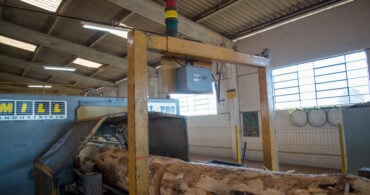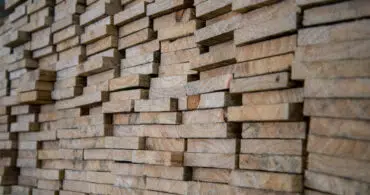

What automation can do for your sawmill, and why now is the time to act
Brazil’s wood industry is one of the pillars of the national economy. According to IBGE, the Brazilian statistics agency (PEVS 2025, released in September 2026), planted forests reached a production value of R$ 41 billion (Brazilian reais) in 2025, up 8.6% from the previous year and 85.6% of all forest production in the country. Sawn lumber remains one of the main products of this chain, used directly in construction, furniture and exports.
Behind these impressive figures, however, lies an operational reality that many industrial sawmills have yet to overcome: management based on manual, inaccurate and scattered data. Spreadsheets filled in at the end of the shift, paper logs, decisions made by eye: practices that undermine productivity, raw material yield and competitiveness.
This article draws on real data and academic research to show how automation and modernization are transforming industrial sawmills, and what your company can do to keep pace.
The current picture: where are the losses?
Before talking about solutions, it is essential to understand where an industrial sawmill loses money today.
Lumber yield: a chronic problem
One of the industry’s biggest challenges is low raw material recovery. Academic studies show significant variation in yield depending on the operation’s technology level:
| Sawmill technology level | Average sawn lumber yield |
|---|---|
| Low (manual process) | 42% to 50% |
| Medium (partial automation) | 50% to 60% |
| High (advanced automation) | 60% to 70%+ |
Sources: CBCTEM (2019); Revista Floresta UFPR (2007); UFSC (2023)
In practical terms, a sawmill with 42% yield turns less than half of each log into finished product; the rest becomes residue. With better process control, the same log could yield 15 to 25 percentage points more. That translates directly into more revenue from the same raw material.
💡 “Most sawmills still have a low level of automation and depend heavily on labor. An estimated 24% of industrial costs go to labor.” — IBFlorestas, 2023
Unplanned downtime: an invisible loss
A study of a mid-sized sawmill in Curitibanos (Santa Catarina, Brazil), using data collected by a production controller, found that only 66.9% of scheduled machine hours were actually productive and free of interruptions, with mechanical availability of 92.8%. The main causes of downtime were:
- Saw changes (28.6% of downtime)
- Operational failures (interruptions of 1 to 15 minutes)
- Stops with no recorded cause
The problem is not just the stop itself; it is not knowing why it happened. Without a record, there is no analysis. Without analysis, there is no improvement.
The cost of manual control
It is still common to find sawmills running on handwritten logs, isolated spreadsheets and no real-time indicators. This model carries concrete risks:
- Logging errors that distort production reports
- No traceability from raw material to finished product
- Management decisions based on outdated data
- No way to compare shifts or operators accurately
What is industrial automation in sawmills?
Industrial automation is the integration of technology (sensors, controllers, software and data systems) to replace manual tasks, make processes more precise and provide real-time information for decision-making.
In sawmills, automation works on three main fronts:
1. Production control
It monitors in real time the quantities produced, piece dimensions, quality, machine stops and yield by operator and shift, turning raw shop-floor data into actionable indicators for managers. See a real case in sawmill production control: higher efficiency, fewer losses.

2. Moisture measurement and control
Wood moisture directly affects final product quality, drying yield and equipment life. In-line sensors allow automatic adjustments to the drying process, avoiding wasted energy and rejected boards. Learn more in lumber moisture content: the hidden problem in the sawmill.
According to Marrari Automação data, installing automated moisture meters led to an average 25% reduction in energy consumption at the sawmills where they were deployed, a direct result of more precise drying with fewer repeat cycles.

3. Drying automation (kilns)
Drying is one of the most critical, and most expensive, steps in production. Automated kilns adjust temperature and time based on real-time moisture readings, ensuring uniformity, quality and energy savings.
“We cut our drying times and also our loss rate, which improved a lot. In drying time, we reduced it by about 20%.” — Marrari customer
The pillars of modernization: what actually changes in the operation
Modernizing an industrial sawmill goes beyond installing new equipment. It means a change in operating culture. The main pillars are:
Real-time visibility
A modern sawmill knows at any moment how many m³ have been produced, which machine is down, which operator is below target and which shift is performing best. This visibility is not a luxury; it is the minimum required for efficient management.
Wood traceability
From log intake to finished product, every step should be recorded. Traceability is required by international buyers and increasingly expected in the domestic market. According to Crea-MT, Mato Grosso, one of Brazil’s largest timber hubs, has 609 registered sawmills and exported to 61 countries in 2023. In a global market like this, traceability is competitiveness.
Performance indicators (OEE)
OEE (Overall Equipment Effectiveness) is the main efficiency indicator for a production line. It considers three dimensions:
| Dimension | What it measures | Practical sawmill example |
|---|---|---|
| Availability | % of time the machine is running | Stop for a saw change = low availability |
| Performance | Actual speed vs. ideal speed | Line below its rated capacity = low performance |
| Quality | % of approved pieces vs. total produced | High rejection rate = low quality |
A sawmill with 65% OEE is wasting 35% of its productive capacity in one of these dimensions. Finding out where is the first step toward improvement.
Integration across shifts and departments
One of the biggest bottlenecks in multi-shift sawmills is information lost at shift change. Digital systems make the history of incidents, defects and stops available to any operator or manager, on any shift, without relying on anyone’s memory.
Automation and sustainability: two goals that go together
Sustainability is no longer just an environmental issue; it is a market requirement. European and North American buyers increasingly demand documentation on the origin and traceability of wood.
In this context, automation is not just operational efficiency. It is a competitive advantage and a sustainability tool.
According to Marrari Automação data, implementing production controllers in sawmills led to a reduction of roughly 30% in wood waste compared with manual operations, a direct benefit to both the bottom line and the company’s environmental footprint.
The International Federation of Robotics (IFR) also notes that industrial automation can raise productivity by up to 30% while keeping quality consistent throughout production.

How to start: from manual to digital management, step by step
Modernization does not have to happen all at once, and often it should not. A structured path reduces risk and makes adoption easier for the team:
| Step | Action | Expected result |
|---|---|---|
| 1. Assessment | Map current losses: yield, downtime, rejects | Identify the biggest bottlenecks |
| 2. Instrumentation | Install moisture sensors and piece counters | Raw data in real time |
| 3. Production control | Implement a digital logging system | Traceability and reliable history |
| 4. Indicators | Turn on OEE dashboards by machine and shift | Data-driven decisions |
| 5. Integration | Connect data to the ERP or corporate systems | A 360° view of the operation |
What specialized sawmill systems offer today
Unlike generic industrial management solutions, there are now systems built specifically for sawmill processes, taking into account log breakdown, varying species and diameters, and the dynamics of multiple shifts and operators.
These systems can:
- Collect data automatically by area, machine or operator
- Record defects, stops and yields in a standardized way
- Organize production orders, shifts and product types
- Generate instant, customizable reports
- Provide remote access from a computer or phone
- Calculate OEE in real time, with alerts when performance drops below target
One example in Brazilian industry is Marrari’s Pro X, a production controller built specifically for sawmills, compatible with moisture sensors, integrated with ERP systems and designed for the industrial environment.
“With innovative tools, accurate sensors and reports, we were able to increase production and manage the process like never before.” — Adriano Tunisky, Sawmill Coordinator, Tesser Madeiras

Conclusion: modernizing is a strategic decision, not just a technical one
Automating and modernizing industrial sawmills is not a distant trend; it is accessible today, with measurable returns. Sawmills that measure well control better. Sawmills that control better waste less. And sawmills that waste less grow more consistently and competitively.
The path starts with a simple question: do you know, right now, what is happening on your production line?
If the answer is “not precisely”, it is time to review your processes.
References (in Portuguese unless noted)
- IBGE. Produção da Extração Vegetal e da Silvicultura (PEVS) 2025. Released September 2026.
- BASTOS, S. L. S. Desempenho operacional de serraria de médio porte. UFSC, Curitibanos Campus, 2023.
- IBFlorestas. Rendimento na conversão de tora em madeira serrada, 2023. Available at: ibflorestas.org.br
- FAGUNDES, H. A. V. Produção de madeira serrada e geração de resíduos. UFRGS, Porto Alegre, 2003.
- CBCTEM. Quantificação de resíduos madeireiros de uma serraria, 2019.
- Revista Floresta UFPR. Rendimento em madeira serrada, v. 37, n. 1, 2007.
- CNI / ABDI / FGV. Sondagem sobre Transformação Digital das Empresas, 2023.
- International Federation of Robotics (IFR). World Robotics Report, 2023 (in English).
- Crea-MT. O setor madeireiro de Mato Grosso, 2024.
- Marrari Automação. Tesser Madeiras case: fine production control. Available at: marrari.com.br
Further reading on the Marrari blog
- Why digitize your sawmill’s production?
- 8 tips to make your sawmill more efficient
- How automation turns into sustainability
- Control and automation improve sawmill efficiency
- Pro X: sawmill production controller
Want to apply this in your plant?
Talk to a Marrari specialist on WhatsApp or see the right solution for your process.