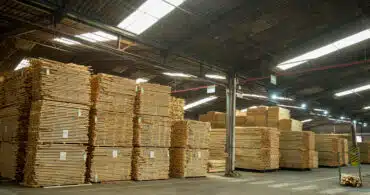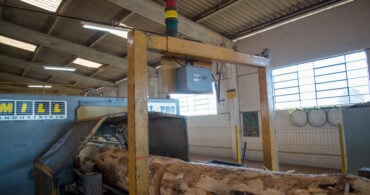

The timber industry is one of the main production sectors for construction and furniture, playing an essential role in supplying quality wood products. However, many sawmills and wood companies face major production challenges, from operational inefficiencies to inconsistent product quality. Control and automation for sawmills has emerged as a promising way to overcome these challenges, bringing higher efficiency, lower costs and better quality. Moisture also plays a crucial role in industrial automation, providing accurate data for process control and production optimization. In this article we explain why automation can save your sawmill and how moisture plays a key role in this context.
Benefits of control and automation in the sawmill
1. Better operational efficiency
Control and automation for sawmills replaces slow, error-prone manual tasks with automated processes, significantly improving operational efficiency. Automated machines can handle steps such as cutting, breakdown and finishing with greater precision and speed, reducing production time and increasing capacity. Automation also allows inventory and logistics systems to be integrated, speeding up material flow and reducing bottlenecks.
2. Lower costs
Automation also reduces operating costs. By replacing labor-intensive manual work with automated machines, sawmills can cut training, wage and benefit costs. Automation also improves energy efficiency, reducing electricity and other resource consumption for long-term savings.
3. Better product quality
Consistent quality is critical to the success of any sawmill. Automation provides more precise and consistent process control, ensuring every piece of wood meets the desired standards. It also reduces human error such as inaccurate cuts or finishing defects, resulting in higher-value products and more satisfied customers.

Why moisture matters in industrial automation
Moisture is a vital factor when implementing automation in a sawmill. It plays a key role in wood quality and in the performance of automated machines. Here are some key points:
1. Quality control
Moisture directly affects the physical and mechanical properties of wood. By measuring and controlling wood moisture during production, you can avoid problems such as distortion, cracking and warping. Automation makes it possible to integrate moisture sensors at different stages, providing real-time data for automatic adjustments and consistent final product quality.
2. Process optimization
Moisture also plays an important role in optimizing wood drying and treatment. With moisture sensors you can accurately monitor wood moisture content, determine the right moment for each step and adjust drying conditions to the specific wood. The result is more efficient drying, shorter production time and energy savings.
3. Equipment maintenance
Excess moisture can damage sawmill equipment such as motors, electronics and hydraulic systems. Automation enables continuous monitoring of ambient humidity, early detection of moisture-related problems and scheduled preventive maintenance, which reduces unplanned downtime and extends equipment life.

Conclusion
Control and automation can be a game changer for sawmills and wood companies, improving operational efficiency, cutting costs and raising product quality. At the same time, it is essential to recognize the role of moisture in automation: accurate measurement and control optimize processes, ensure wood quality and keep equipment in good working order. Investing in automation that takes moisture into account is key to the success and sustainability of the sawmill. See also Marrari’s production control solutions.
Want to apply this in your plant?
Talk to a Marrari specialist on WhatsApp or see the right solution for your process.