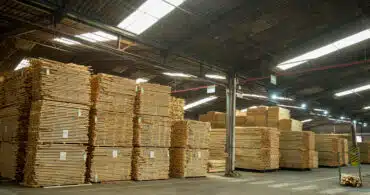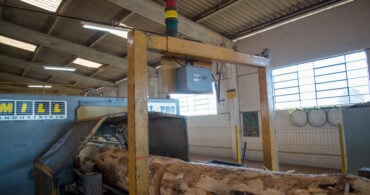

The reality in many sawmills: analog processes in a digital age
Why digitize production? Despite the technology available today, many sawmills still run on manual controls and scattered information. Production records written by hand on paper, data typed into spreadsheets, no integration between departments and no real-time indicators are a common picture, especially in small and mid-sized companies in the industry.
This may look simple or good enough at first glance, but it brings a series of operational limitations and management risks. In an increasingly competitive market that demands quality, productivity and traceability, running on outdated, error-prone information means giving up real opportunities for growth, control and profitability.
What are the main problems of a sawmill that still relies on manual controls?
Analog production management does not just make it harder to collect and analyze data; it undermines the whole operation. These are the main negative impacts of this way of working:
1. Human error and inconsistent data
Manual records are prone to mistakes: transposed numbers, missing information, duplicate entries or even lost paper notes. These inconsistencies make reports unreliable and make it hard to pinpoint deviations.
2. Slow access to information
Production happens in real time, but management becomes reactive when data has to be collected, typed in, checked and consolidated by hand. Operational problems are spotted late, which prevents quick corrective action.
3. No traceability
Without a structured system, it is hard to trace the source of problems such as production defects, raw material waste or low productivity. With no detailed history by machine, operator or shift, in-depth analysis is impossible and audits suffer.
4. Scattered information and poor communication
Often each department keeps its own spreadsheets or notes, with no data integration. This hampers communication between production, maintenance, quality and management, and leads to rework and misaligned information.
5. No reliable performance indicators (KPIs)
Without well-organized real-time data, indicators become subjective and depend on the experience of operators or managers. The plant loses the chance to measure efficiency, yield, machine availability, downtime and other data that is key to continuous improvement.
The impact of digitization: more than technology, a change in culture
Digitizing production is not just a technology upgrade. It is a structural change in how the plant collects, processes and uses information. Done well, it brings concrete, immediate benefits to the sawmill, such as:
- Full real-time visibility of production across all departments;
- Reliable data, with no recording errors or rework;
- Complete traceability, from raw material to finished product;
- Faster, better-informed decisions, based on accurate indicators;
- Integration between areas, improving internal communication and teamwork;
- Less loss and waste, through continuous analysis of the operation.
Digitizing production is therefore a key step toward operational excellence, greater competitiveness and long-term business sustainability.
Pro X: intelligence applied to sawmill production control
With the specific needs of the wood industry and a practical, affordable digital transition in mind, Marrari developed Pro X, a production control system designed to automate data collection and turn that data into management intelligence.
Unlike generic solutions, Pro X was built around the typical industrial processes of sawmills, which makes it a highly effective and adaptable tool.
Key Pro X features
- Automatic production data collection by department, machine or operator;
- Standardized logging of defects, stoppages and yields;
- Organization of production orders, shifts and product types;
- Instant, customizable reports with charts and data export;
- Remote monitoring from a computer or phone (optional app);
- Works with any type of machine, logging every second the pieces entering and leaving the line;
- Simple, rugged interface designed for the industrial environment.
This setup lets Pro X act as the digital brain of the operation, giving full visibility and control over production, with the option of connecting to the company’s management system (ERP).

In practice: how Pro X changes the sawmill’s routine
Picture a common scenario: a sawmill with several shifts, a varied product mix and many operators. With manual control, the company struggles to answer simple questions such as:
- Which machine produced the most yesterday?
- Which operator had the best yield?
- How many defective pieces were produced this month, and why?
- How many stoppages did line 2 have last week?
With Pro X, those answers are a few clicks away. Managers get instant access to dashboards with up-to-date data, analysis by period and alerts when performance drops below target. This enables immediate corrective action, bottleneck identification and continuous optimization.

The role of digitization on the road to Industry 4.0
Industry 4.0 calls for interconnected, traceable, intelligent and autonomous processes. Getting there starts with digitization systems that are affordable, robust and designed for real industrial conditions.
Beyond being a management tool, Pro X is a strategic instrument for digital transformation: it connects shop-floor data to management decisions, promoting transparency, efficiency and sustainable growth.
Conclusion: digitizing production is a strategic decision
If your sawmill still runs on manual records, isolated spreadsheets and scattered data, it is time to rethink your processes. Digitizing production is more than a technological step: it is a cultural change that puts information at the center of industrial management.
Tools such as Pro X do more than automate production records: they turn data into intelligence, bringing more control, productivity, traceability and competitiveness to your company.
The future of industry has already begun. And it is digital.
Want to apply this in your plant?
Talk to a Marrari specialist on WhatsApp or see the right solution for your process.