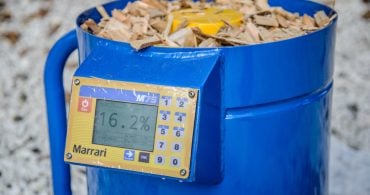

There are many reasons to measure a material’s moisture content: checking incoming supplier deliveries, verifying that the process meets specifications, and many other purposes that Marrari moisture meters serve.
What moisture meter recipes are
Specifically, the portable meters M65, M71, M75 and M75D work with recipes: a curve that relates the disturbance of the electromagnetic field emitted by the instrument’s sensor, expressed in “bits”, to the material’s moisture content. With this information, Marrari develops an operating curve for the material, using a linear equation that reliably converts bits into moisture.

With a recipe specific to the material, the instrument delivers more accurate and reliable data. The recipe can also be improved at any time: adding new data extends the curve, allowing a wider moisture range and greater accuracy.
Recipe applications
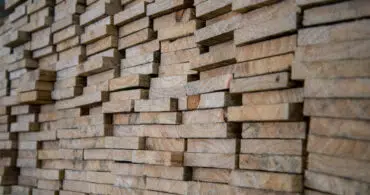
Recipes open up new uses for Marrari meters, with applications for measuring the moisture of paper, yerba mate, cardboard, wood veneers and many other materials, which can make a real difference to your process.

How recipes are created
When the customer does not have the facilities to carry out the procedure on site, recipes are created by Umilab, Marrari Automação’s calibration and testing laboratory. When they do, our after-sales team provides all the support and training needed to get the most out of the instrument.

When Umilab carries out the procedure, you receive a report with all the information: moisture ranges, process uncertainties, variables that can affect reading accuracy and an estimate of the reading error. This information makes measuring your material’s moisture faster, more accurate and more reliable.
Author: Bruno Daldin Leite, Industrial Wood Engineer (Federal University of Paraná, 2021), Metrology Test Inspector at Umilab
Want to apply this in your plant?
Talk to a Marrari specialist on WhatsApp or see the right solution for your process.