 Production control Marrari
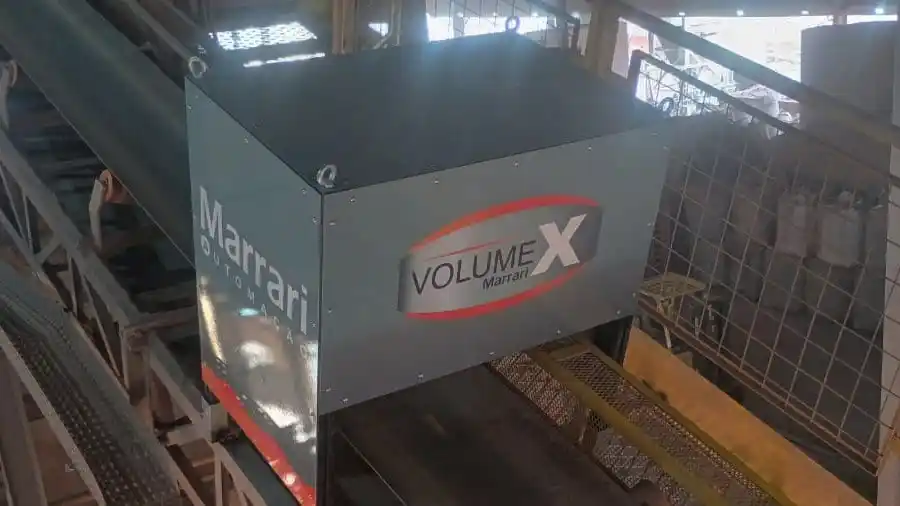
Volume Meter for Conveyor Belts – Volume X
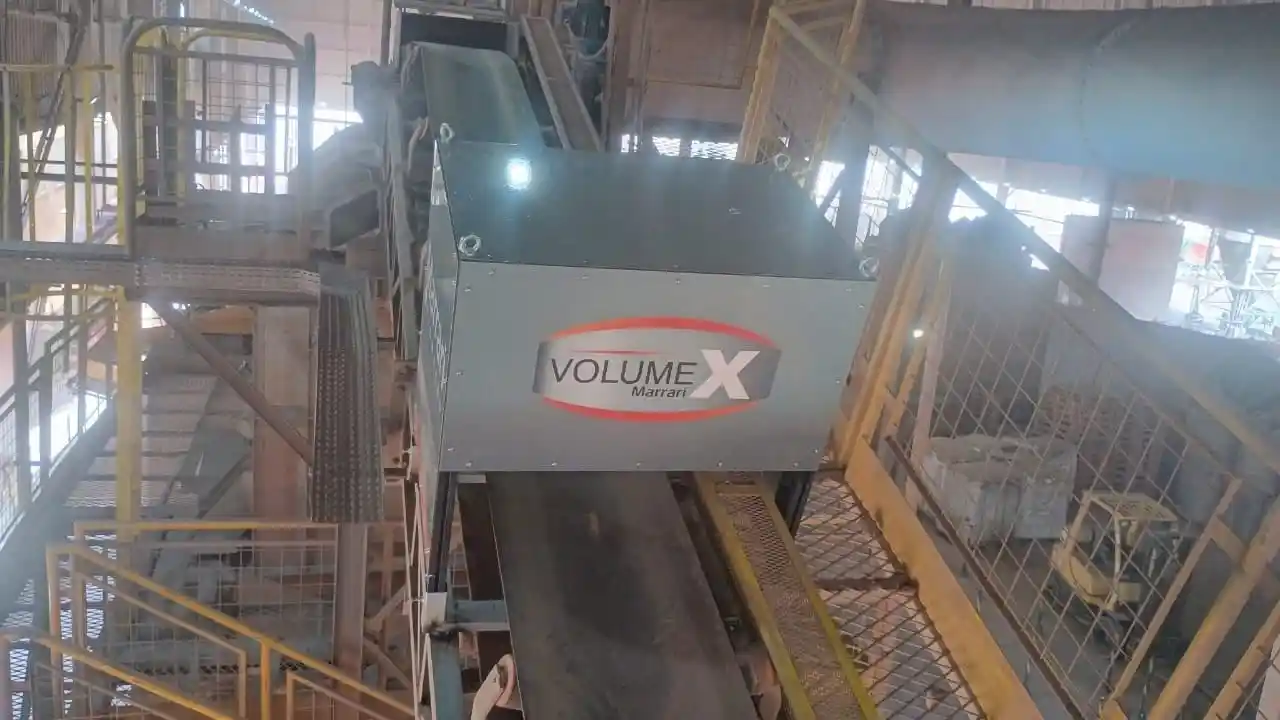
Volume meter for conveyor belts, with a
- Lasermeasures volume on the belt, no contact
- m³/h
real-time flow and volume - 2%static accuracy (dynamic: up to 5%)
What is the Volume X volume meter for conveyor belts?
- Custom mount, usually with no line changes
- IP65 laser scanner
- Who it is forBiomass, mining, pulp, sugarcane, cement and steel
- What it measuresFlow in m³/h, totalized volume and belt speed
- With a belt scaleBulk density and a
cross-check of the weight - Integration
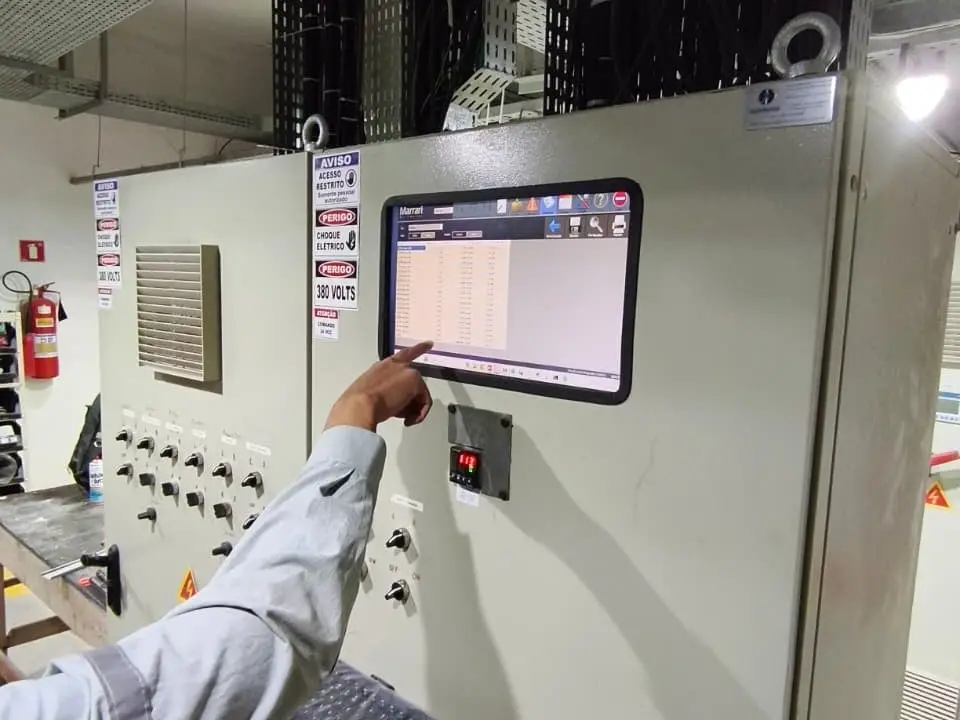
4–20 mA, Modbus and Ethernet to the PLC or SCADA
Why measure volume on the belt, not just weight?
The belt scale tells you how much it weighed;
- Weight
cross-checked :real-time volume and t/h todouble-check the belt scale. - Instant alarms: production target, overload, poorly distributed load and belt misalignment.
- OEE management: run and downtime and how much of the load capacity is used.
Which belts and materials is Volume X installed on?
Practically any bulk solid that travels on a conveyor belt; the more uniform the particle size, the more accurate the measurement.
Boiler feed · Chippers · Pulp · Sugarcane · Mining and aggregates · Steel and cement · Food and logistics ·
- Boiler feedbiomass flow: wood chips, pellets, sawdust and organic powders.
- Chippersproduction control of static or mobile forestry chippers.
- Pulpvolume and flow of chips on their way to the digester, for production control.
- Sugarcaneflow of chopped cane and bagasse at the mill.
- Mining and aggregatesiron ore, crushed stone, limestone and fertilizers.
- Steel and cementores, limestone and other bulk solids on the belts, measured without contact.
- Food and logisticsvolume control in transport and storage.
Low-density materialssuch as chips and biomass, where a belt scale alone has little resolution.
How much passes on your belt in m³/h and t/h?
The math is m³/h = area × speed and t/h = m³/h × density.
Flow in m³/h = profile area × belt speed; in t/h = m³/h × density.
With your numbers. An estimate with a typical profile shape;
Formula
Area ≈ 2/3 × width × height (parabolic profile). m³/h = area in m² × speed in m/s × 3,600. t/h = m³/h × density in kg/m³ ÷ 1,000.
How does the scanner measure volume?
The laser scanner, installed over the belt, reads the material height up to 100 times per second without touching the load. The central unit combines the profile with the belt speed and shows the volume on the display or sends it to the PLC and SCADA.
- Scans the load
The laser maps the material profile: up to 100 readings per second on the HR 900.
- Calculates volume
Profile × belt speed: flow in m³/h and totalized volume.
- Converts to mass
With the entered density, or the one measured with the scale, the flow in t/h.
- Alerts and logs
Production, batch and flow alarms; charts and OEE reports.
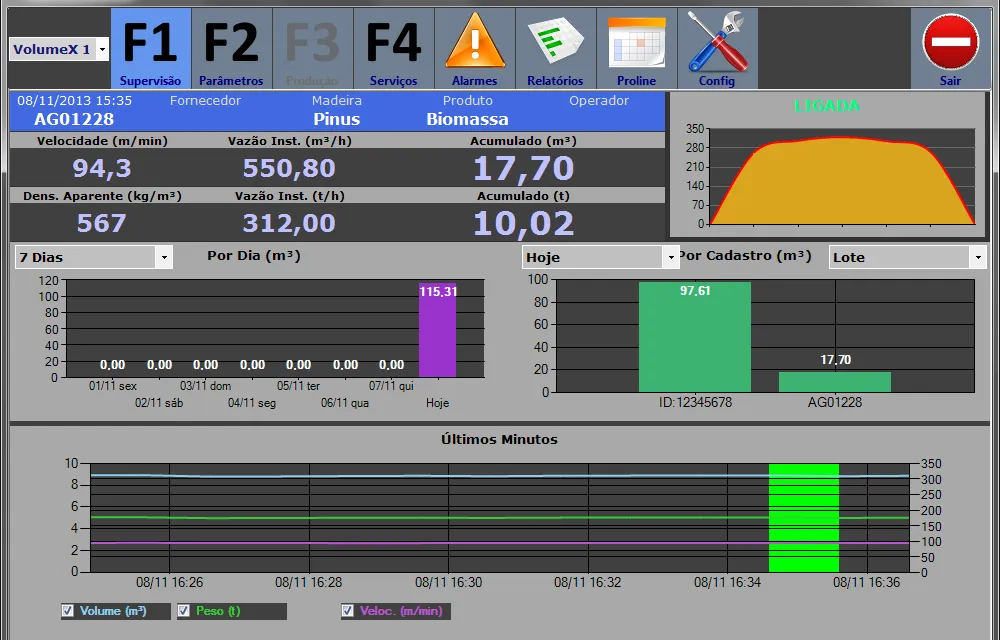
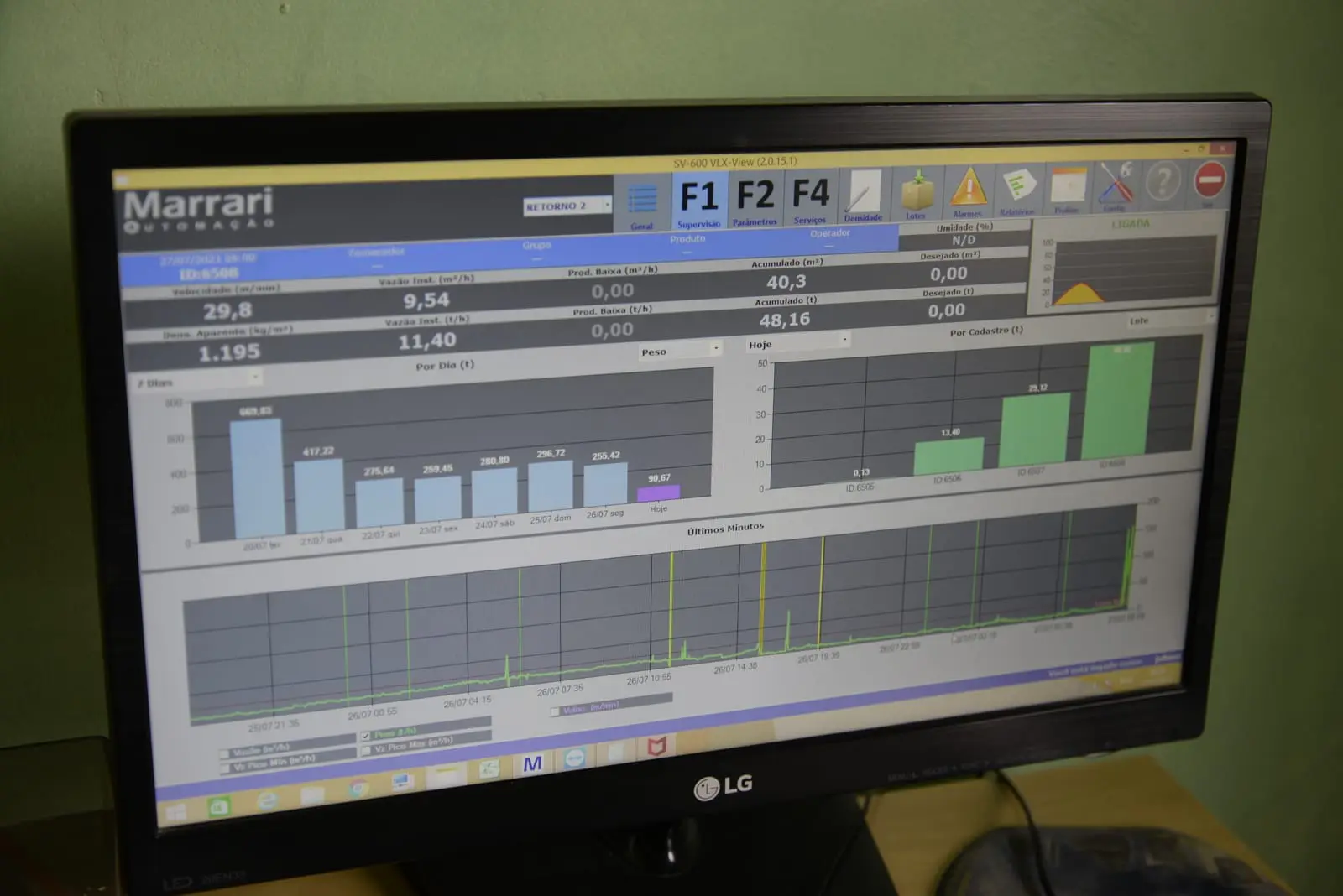
Conveyor belt volume meter: what does the Volume X software show?
On the
How to read this screen
- At the top, belt speed, flow in m³/h and t/h, the accumulated total and bulk density.
- The yellow shape is the load profile the laser is reading.
- The charts show volume per day, per record and over the last minutes.
How to read this screen
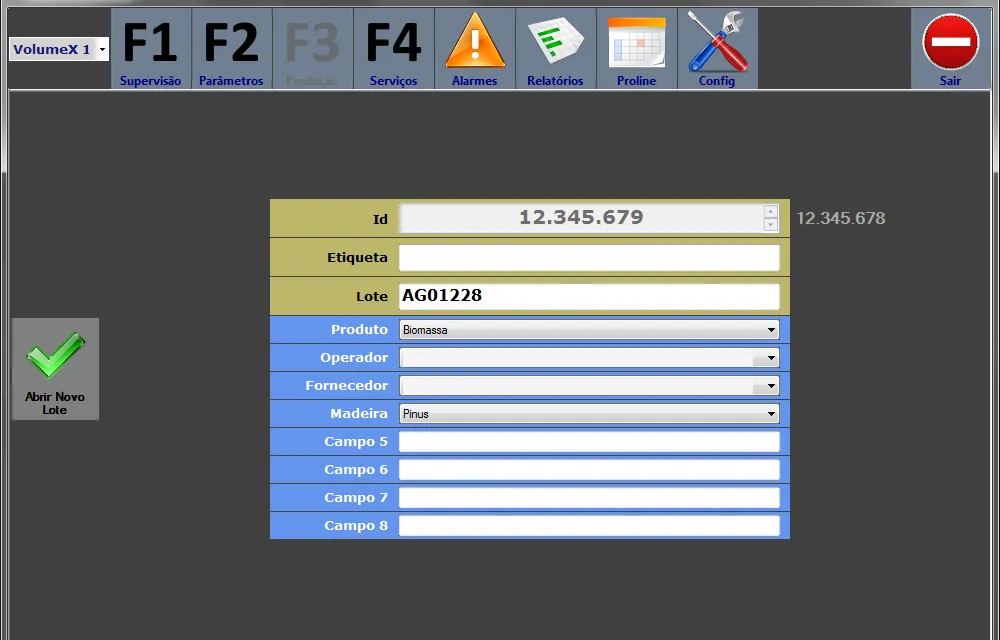
- Before measuring, the operator opens the batch with its ID.
- Product, operator, supplier and wood are tied to that volume.
- So the report separates what came in by supplier or by product.
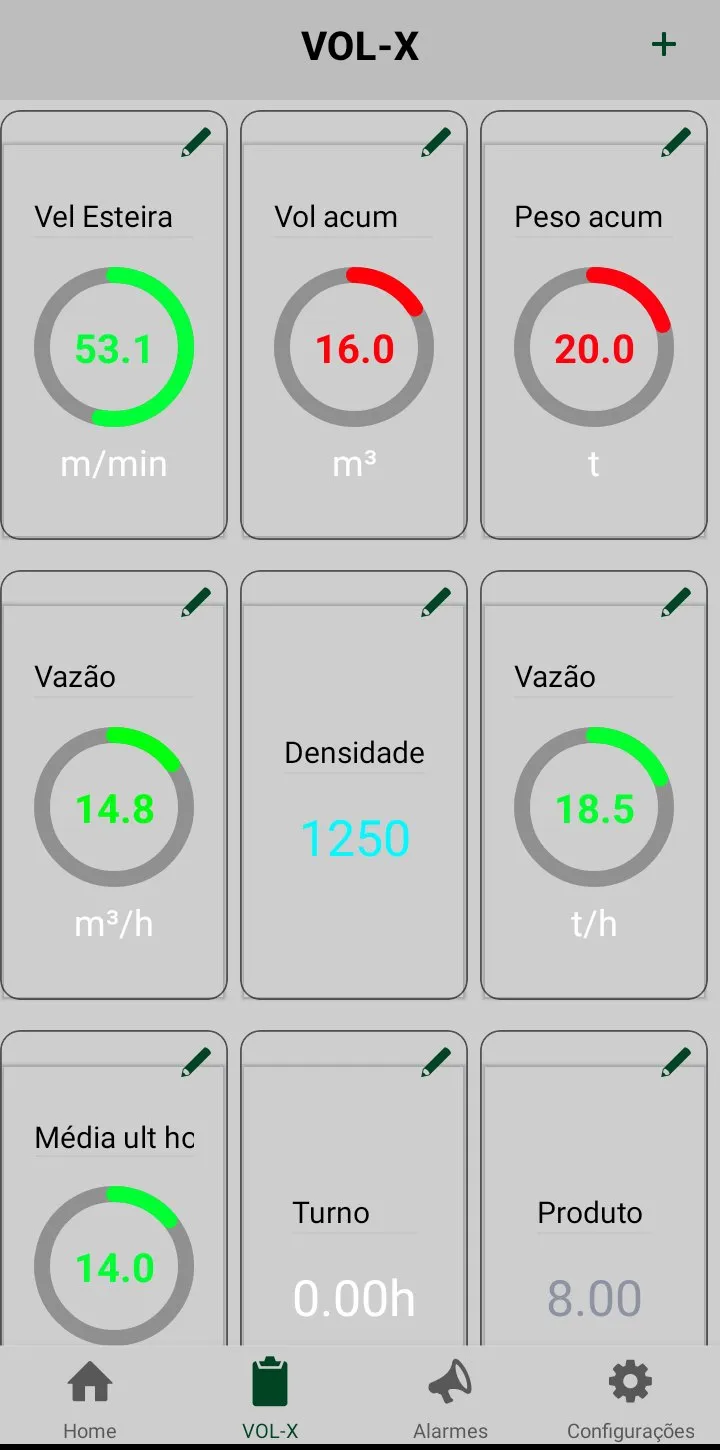
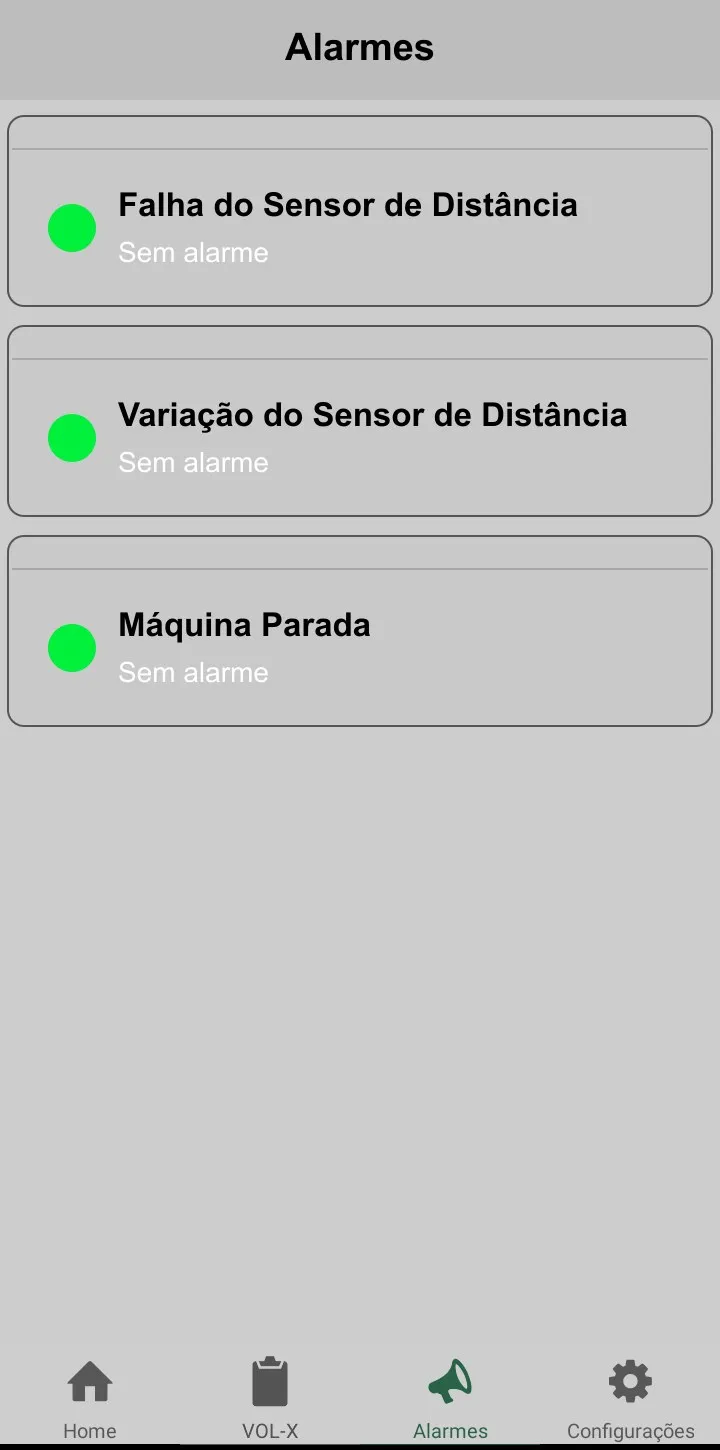
How to read this screen
- The same measurement, on gauges, on the phone screen.
- Belt speed, accumulated volume and weight, flow and density.
- You can follow the shift and the product without walking to the belt, and see alarms in their own tab.
Who uses Volume X
At ParanaGran, which produces limestone for fertilizers in Brazil,
- Faults at oncealerts show where the line fails (ParanaGran)
- Stops in viewthe focus of each problem (ParanaGran)
- No contactlaser scanner over the load
- 2%static accuracy (dynamic: 5%)
Companies using


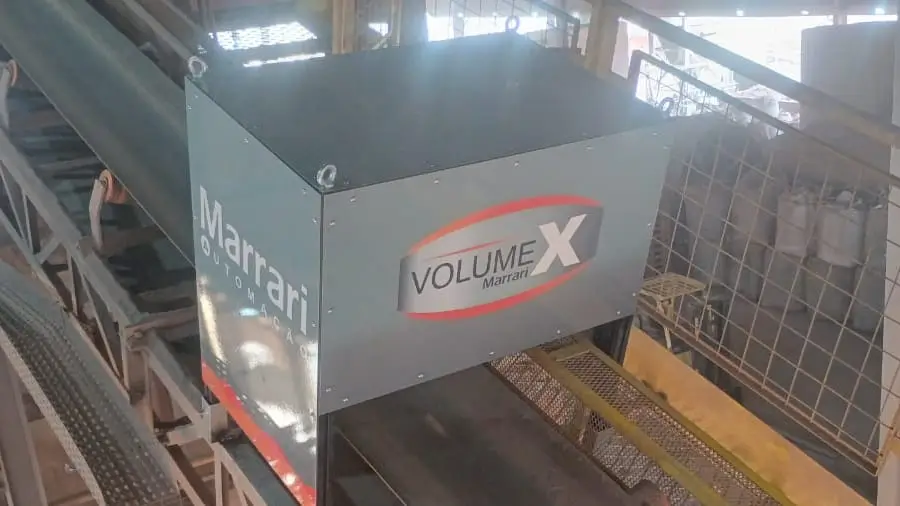
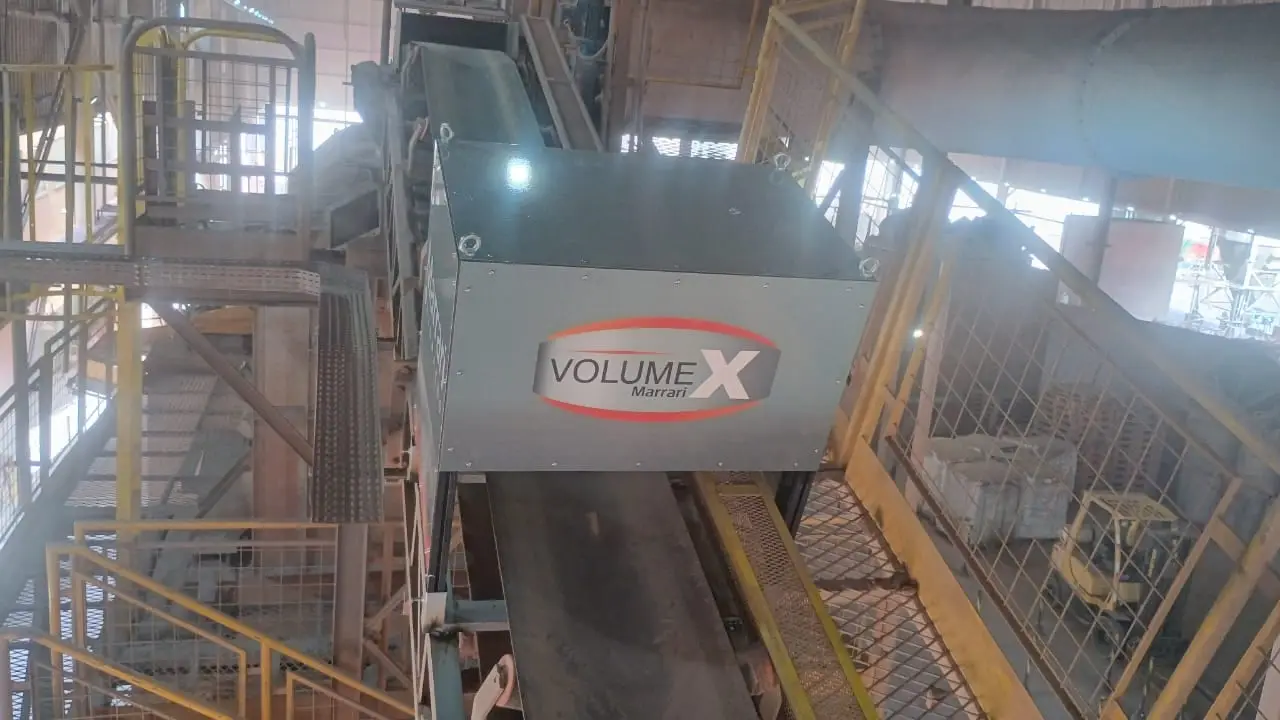
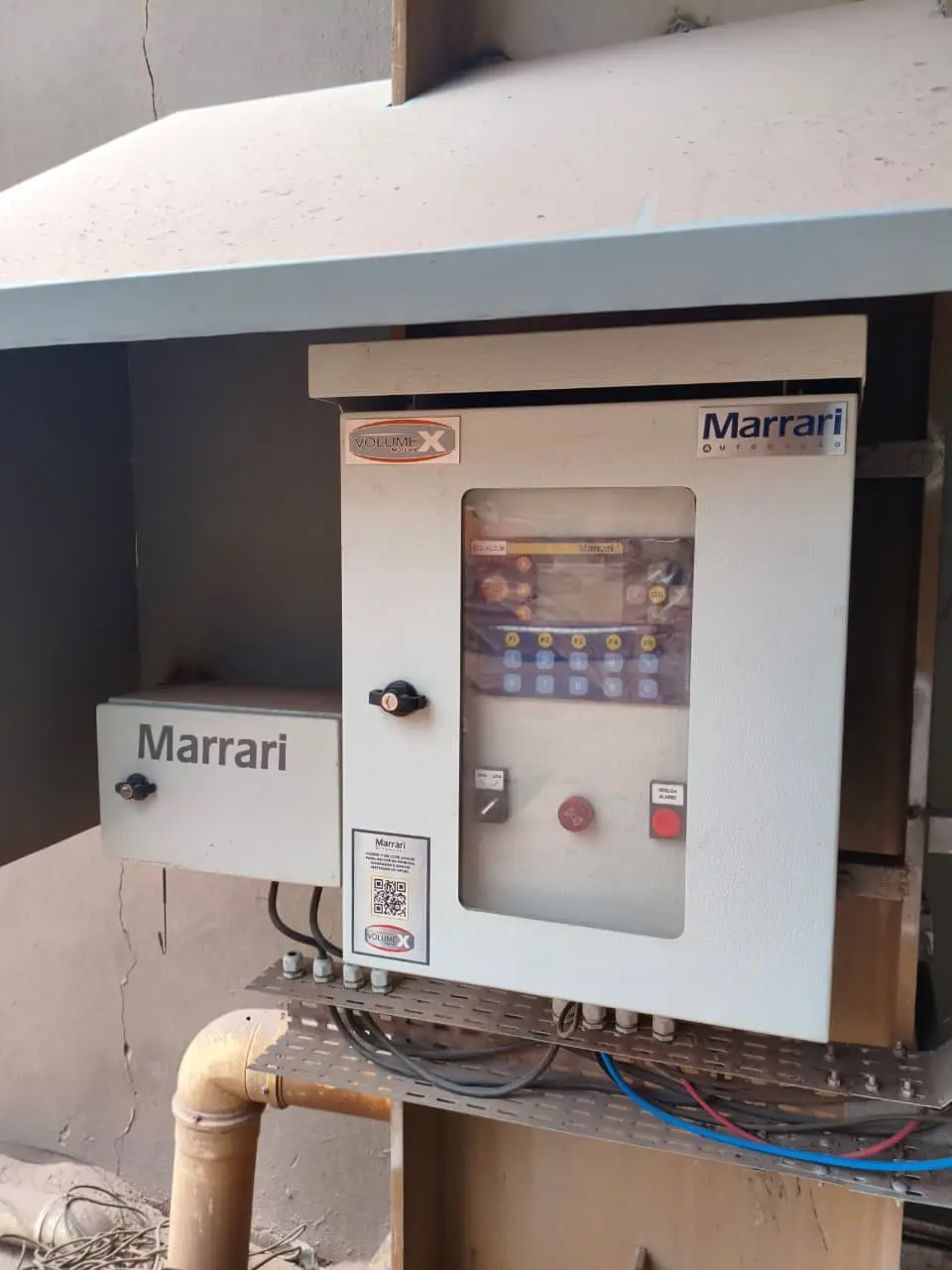
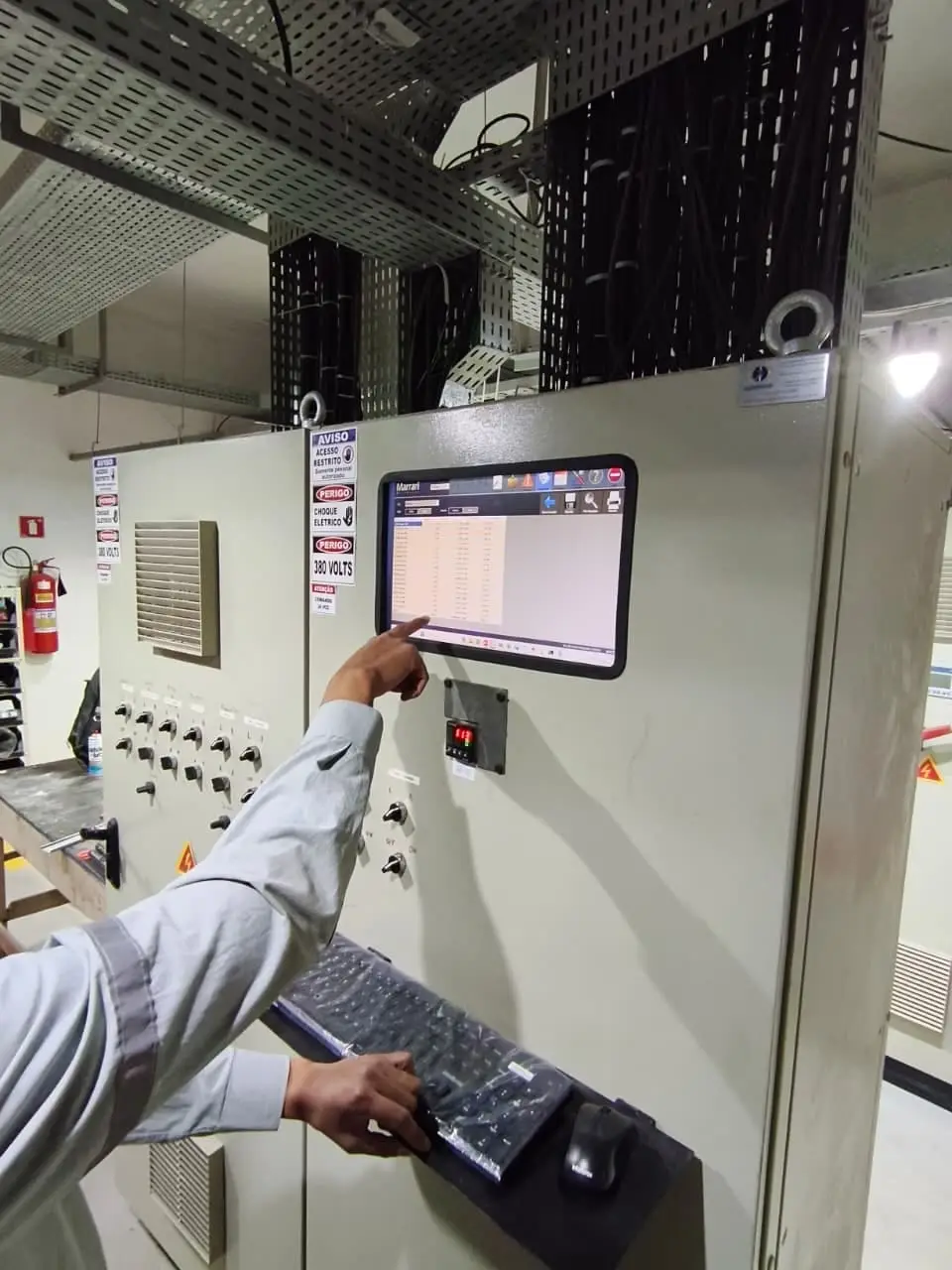
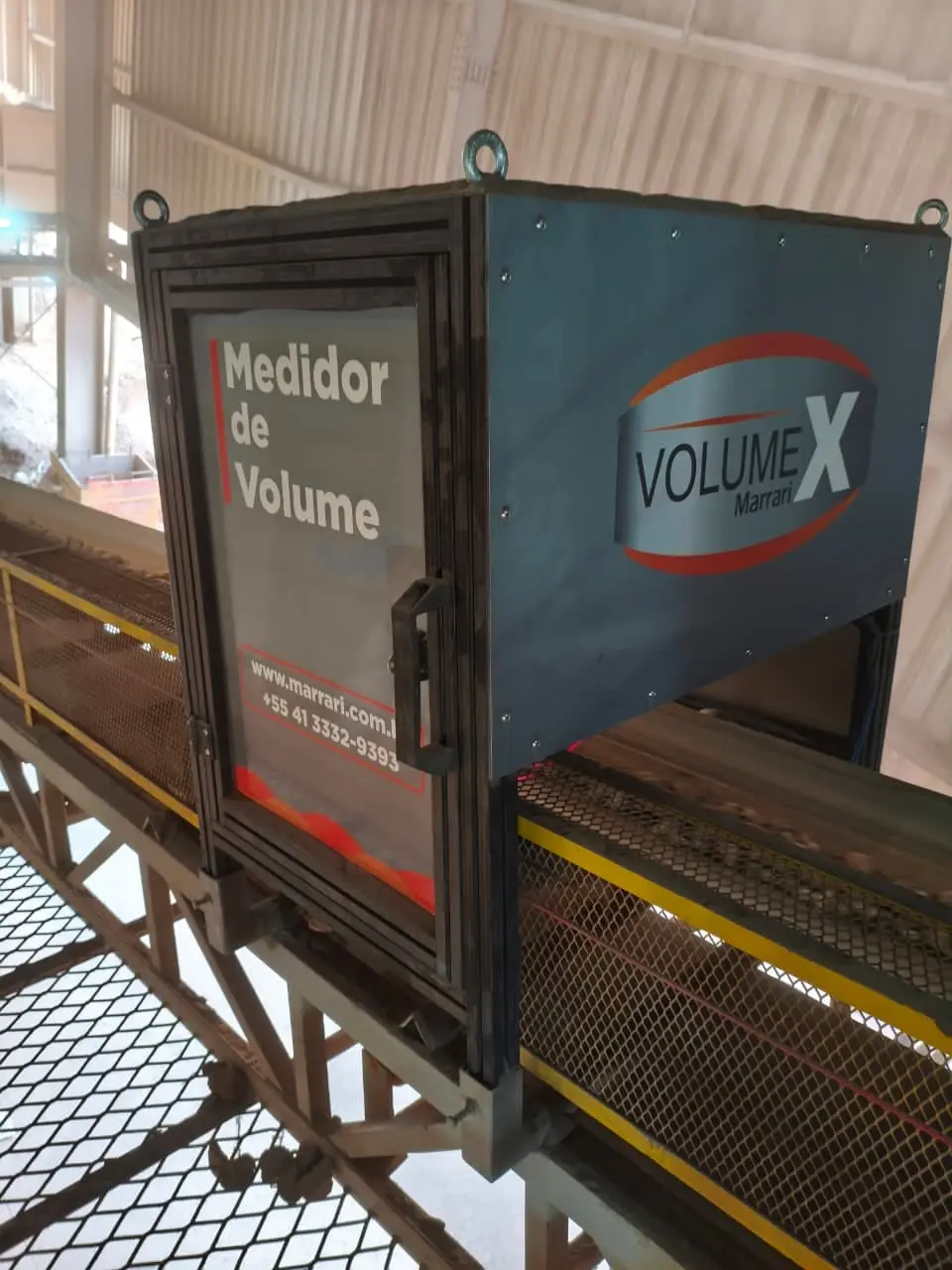
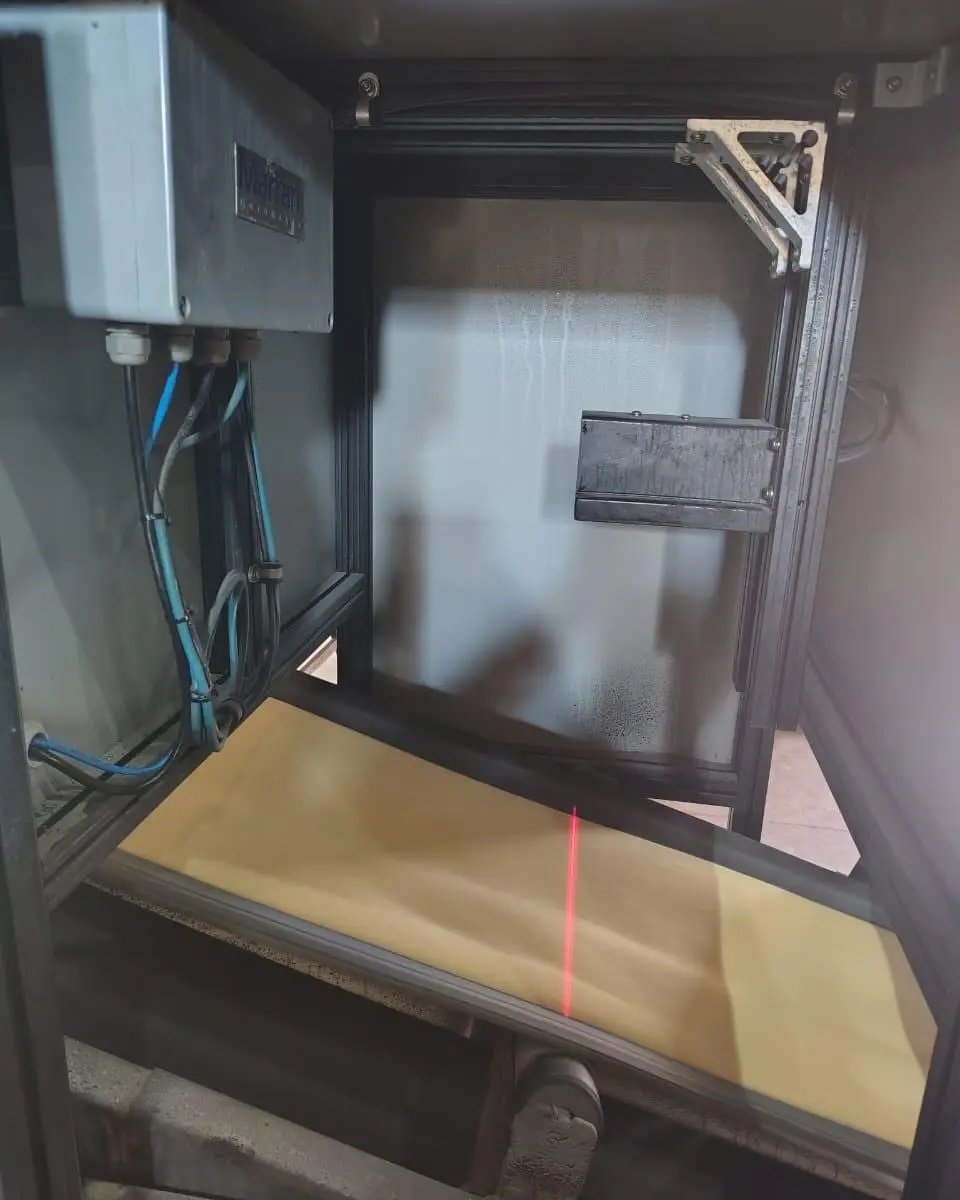
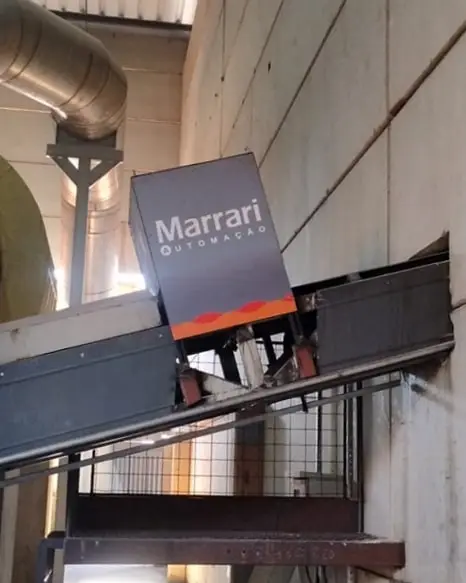
Volume X photos
Real photos of the equipment and installations. Click or tap a photo to enlarge it.
Technical specifications of Volume X
Measurement
| Measuring principle | |
|---|---|
| Models | HR 900: load up to |
| Accuracy | volumetric flow: 2% of reading (static); up to 5% (dynamic, depending on belt and material) |
| Density and mass | bulk density (kg/m³) with a belt scale; mass flow from the density; automatic density correction for moisture |
| Quantities and alarms | instantaneous (m³/h) and totalized (m³) volume; production, batch and min/max flow alarms |
| Reports | statistical and production charts; OEE reports |
Installation and integration
| Outputs and communication | 2 × |
|---|---|
| Temperature | panel up to |
| Protection | IP65 scanner; IP54 central unit |
| Central unit | 500 × 400 × |
| Power supply | 95 |
| Warranty | 6 months |
Frequently asked questions about the conveyor belt volume meter
Does the sensor suffer external interference that can affect the measurement?
Can I install the system anywhere other than conveyor belts?
Does Volume X replace the belt scale?
Why combine a volume meter with a belt scale?
How does Volume X help operational safety?
What is the Volume X warranty?
How does buying from outside Brazil work?
No question with that term. Try another word or talk to the team on WhatsApp.
Request a quote: Volume X
Free and with no obligation. A Marrari specialist replies within 24 business hours.
- Installation and integrationCustom: Marrari engineering assesses the belt and the material and defines the scanner mount; in most cases, with no change to the line.
6-month warrantyFor all Marrari systems and equipment.- Support and calibrationSupport in Brazil and Latin America; new recipes from the UmiLab laboratory.