Producing agricultural limestone (aglime) is essential for farming and for correcting soil acidity. Yet how to control limestone production efficiently is a challenge for many plants. One of the critical points is accurately measuring the volume of material carried on conveyor belts, which directly affects quality, productivity and profitability.
In this article, we cover the main challenges of measuring volume in limestone handling, the impact of poor control and how to optimize material management to improve operational efficiency.
The problem: measuring and controlling limestone flow on conveyors
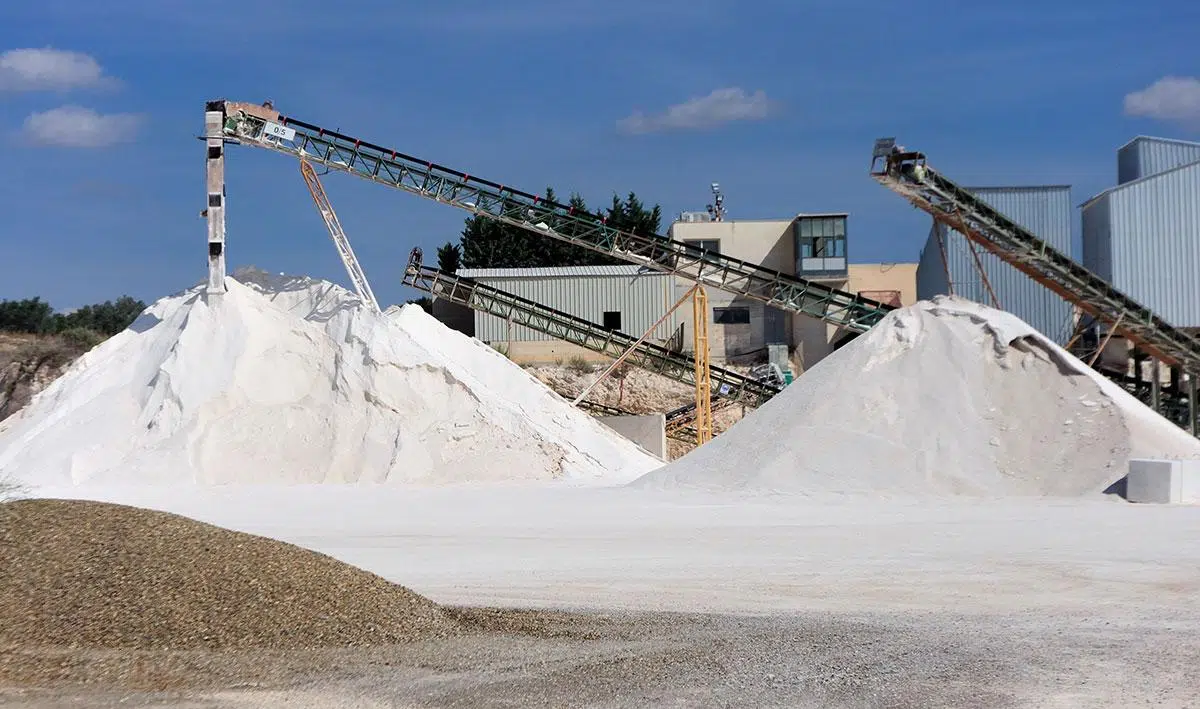
Conveyor belts are central to moving limestone through mining and processing plants. However, accurately measuring the volume of material passing over them can be complex and subject to several operational difficulties.
Main challenges
- Variable material density: limestone density varies with moisture and particle size. The same volume can therefore correspond to different masses, and control based on a single quantity leads to inconsistent dosing and application of the final product.
- Weighing errors: many plants use belt scales to calculate the amount of material conveyed. These devices can be affected by belt vibration, incline, mechanical wear and the need for frequent calibration.
- Hard-to-detect blockages and spills: without effective monitoring, flow blockages or spills can go unnoticed, causing unexpected stoppages and significant losses.
- No control over production yield: without reliable measurements, it is hard to know actual output over time, which hurts predictability and planning.
- Difficulty automating production control: many processes still rely on manual measurements and estimate-based adjustments, limiting automation and reducing efficiency.
The impact of poor control on limestone production
Without accurate measurement of the limestone volume on the belts, plants can face several operational problems:
- Lower productivity: without proper control, material can be wasted or the process can be fed unevenly.
- Lower product quality: if the amount of limestone processed is not uniform, the product’s composition and effectiveness can suffer.
- Higher operating costs: inefficient processes waste energy and raw material and increase maintenance needs.
- Greater risk of fines and penalties: errors in quantifying material can cause tax issues or regulatory non-compliance.
- Difficulty meeting demand: poor predictability can compromise delivery dates and customer contracts.
Knowing how to control limestone production efficiently reduces these impacts and makes industrial processes more efficient and predictable.
How do you solve these problems?
Overcoming these challenges requires technology that monitors the limestone volume conveyed accurately and automatically.
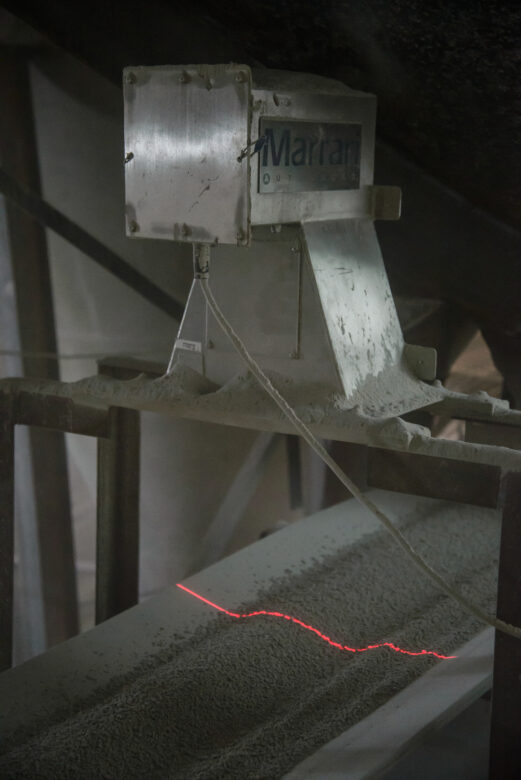
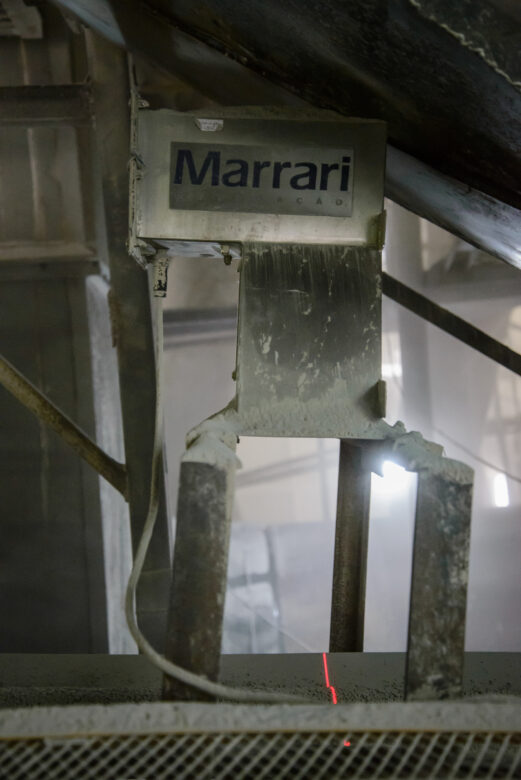
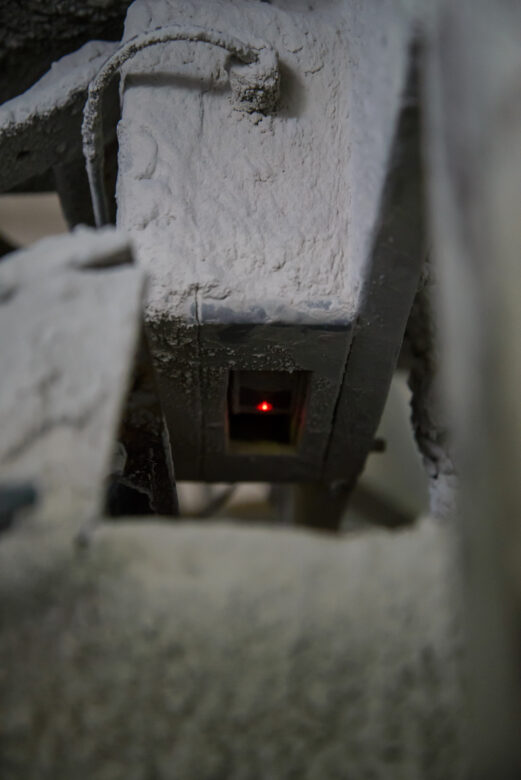
One solution is Volume X, a laser volume meter developed by Marrari Automação. Unlike belt scales, which measure weight only, Volume X scans the load profile on the conveyor and calculates the actual volume of material conveyed. Using the density entered, it also calculates mass flow, with an accuracy of ±2% of the measured value.
Learn more about the system in this video (in Portuguese):

Volume X benefits
- Non-contact measurement: the laser measures material height on the belt and calculates actual volume, without touching the material and without the mechanical parts of a belt scale.
- Volume and mass in one system: calculates instantaneous and totalized volume and, with the density entered, mass flow; density can be corrected for moisture.
- Real-time monitoring: data is sent to industrial automation systems (4-20 mA, Modbus, PROFIBUS or Ethernet), enabling immediate process adjustments.
- Spots bottlenecks and faults: the system issues alerts for production targets, overload and belt misalignment.
Implementing Volume X not only improves the accuracy of production control but also makes the whole process more reliable.
Conclusion
Accurate control of limestone production is essential for operational efficiency and product quality. Monitoring the volume carried on conveyor belts is a critical part of this, helping reduce waste and raise productivity.
With modern solutions such as Volume X, you can complement or replace traditional belt scales with a highly accurate, reliable, easy-to-maintain measuring system. Your plant can then cut waste, improve productivity and gain more control over limestone production, becoming more efficient and competitive.
See also Marrari’s volume measurement solutions.