
Energy in Brazil: the context
Brazil stands out globally for an energy mix that is cleaner than the world average: almost half of the energy it consumes comes from renewable sources, compared with around 15% worldwide. Much of that advantage comes from ethanol and sugarcane bagasse, but also from solid biomass, fuel obtained from forestry, agricultural and agro-industrial residues.
Pulp and paper boilers, sawmills, sugar and ethanol mills, MDF and particleboard plants and even food processors use solid biomass to generate heat, steam and even electricity. So the role of these fuels in public policy is not only an environmental question; it is also an economic and strategic one for industrial competitiveness.
What are solid biofuels?
Solid biofuels are plant-based fuels, usually residues or by-products, that can be burned to produce heat or electricity. Some examples:
- Wood chips: widely used in industrial boilers.
- Sawdust and sawmill residues: used for drying and heat generation.
- Pellets and briquettes: compacted biomass that is easier to transport and burns more steadily.
- Sugarcane bagasse: used for cogeneration at mills and also sold to other industries.
- Rice and coffee husks, açaí seeds and other agro-industrial residues.
- Forestry residues: branches, leaves and leftovers from mechanized harvesting.
Each type has different technical characteristics: calorific value, moisture content, bulk density, particle size and ash content. These factors determine boiler efficiency, transport costs and even maintenance risks.
Public policy and the place of solid biomass
RenovaBio
Created in 2017, RenovaBio is Brazil’s main biofuels policy. Although it focuses mainly on liquids (ethanol and biodiesel), it opened a central debate: how to measure and reward greenhouse gas (GHG) emission reductions. That thinking also shapes how solid biomass is starting to be treated in planning and incentives.
EPE planning and the PDE
Brazil’s Energy Research Office (EPE) regularly publishes the Ten-Year Energy Expansion Plans (PDE), which project supply and demand over the next decade. In these reports, solid biomass appears as a way to boost renewable power generation and as a strategic fuel for industry.
CNPE and MME decisions
The National Energy Policy Council (CNPE) and the Ministry of Mines and Energy (MME) have reinforced the role of biofuels as tools for energy security and decarbonization, including incentives for distributed generation and regional bioenergy programs.
Why invest in solid biomass?
- Lower emissions
Burning sustainably sourced biomass is considered “carbon neutral”, since it releases the CO₂ the plant absorbed as it grew. - Use of residues
Residues that were once discarded or burned inefficiently start creating value, closing the loop of the circular economy. - Energy security
Biomass reduces dependence on imported fossil fuels and vulnerability to external shocks. - Regional development
Using agroforestry residues creates local jobs, supports supply chains and can lower logistics costs.
The sector’s big challenges
Despite its advantages, solid biomass still faces some obstacles:
Fuel quality
- High moisture sharply reduces calorific value. Wood chips at 50% moisture deliver about 40% less useful energy per kilo than chips at 25%.
- Irregular particle size hampers automatic feeding and increases the risk of failures.
- Ash and impurities raise maintenance costs and hurt combustion efficiency.
Logistics and storage
- Wet biomass can ferment, rot or even catch fire through self-heating.
- Hauling low-density material is expensive, which is why pellets and briquettes are gaining ground.
Sustainability and certification
Buyers in Brazil and abroad increasingly demand traceability of biomass origin, to ensure there was no illegal deforestation or other negative environmental impact.
The role of instrumentation and automation
This is where technology makes all the difference. To ensure efficiency and meet policy requirements, industry needs reliable real-time data.
Where to measure and control
- At receiving:
quick moisture checks keep off-spec loads out of production. - On the boiler feed conveyor:
continuous moisture and density sensors let you adjust air and fuel in real time. - In the drying process:
automatic controllers help shorten drying time, save energy and keep wood or biomass at the right moisture. - In management reports:
historical moisture, volume and weight data make it possible to prove efficiency gains, calculate ROI and even support environmental audits.
How Marrari can help
Marrari Automação offers solutions designed for exactly these critical points:
- M75 quick moisture measurement: checks biomass quality at receiving.
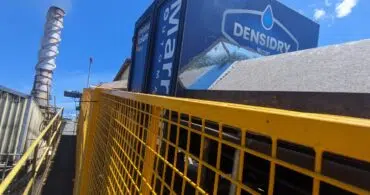
- DensiDry continuous moisture and density measurement / M75D: monitors flow and quality on conveyors and adjusts boiler feed in real time.
- Wood drying controllers: standardize drying and cut energy use.
- Supervision and reporting systems: bring together moisture, density and volume data to support decisions, audits and environmental compliance, with full process visibility, alarms, history and integration with SCADA systems.
In other words, Marrari solutions help companies turn data into energy efficiency, aligning production, sustainability and regulatory compliance.
The future of solid biomass in public policy
Experts and government bodies point to several trends likely to gain strength in the coming years:
- Tax incentives and credit lines for biomass pelletizing, drying and logistics.
- Certification programs to guarantee sustainability and traceability.
- More distributed generation from biomass in regions with strong forestry and agro-industrial output.
- R&D investment to raise combustion efficiency, cut emissions and improve automation systems.
Conclusion
Solid biofuels are a strategic asset for Brazil: they help cut emissions, make use of residues and strengthen the country’s energy security. But using them efficiently depends on one thing above all: measuring and controlling biomass quality in real time.
Marrari helps industry meet that challenge with measurement and automation solutions that get the most energy out of every kilo of biomass. That way, companies don’t just adapt to energy policy; they take a leading role in the energy transition.
Want to apply this in your plant?
Talk to a Marrari specialist on WhatsApp or see the right solution for your process.