Biomass production demands precision at every stage, and moisture is one of the most critical factors. In this article, we look at biomass moisture meters and why they are essential for efficiency and quality in wood chip and firewood operations.
Why moisture matters in biomass
Moisture plays a central role in biomass production, affecting both quality and process efficiency. When it is above ideal, wood chips and firewood need more drying, which lengthens production times, increases energy use and lowers combustion efficiency.
On the other hand, overly dry biomass burns very fast, produces more dust and can push furnace temperature too high, requiring air and feed adjustments. Keeping moisture within ideal limits is therefore essential for efficient, high-quality production.
Why moisture meters matter
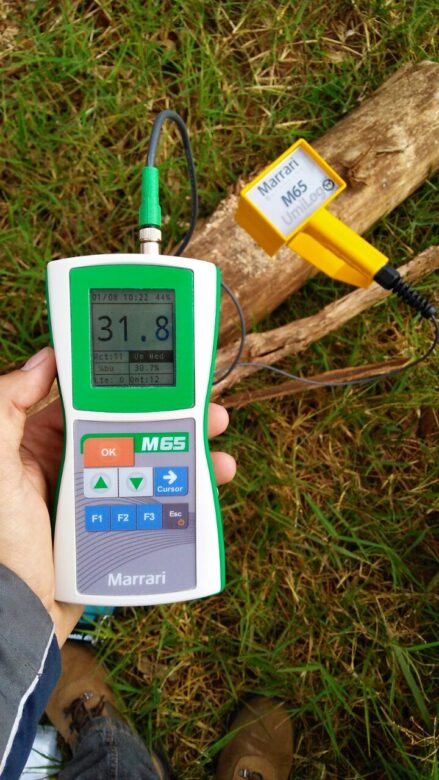
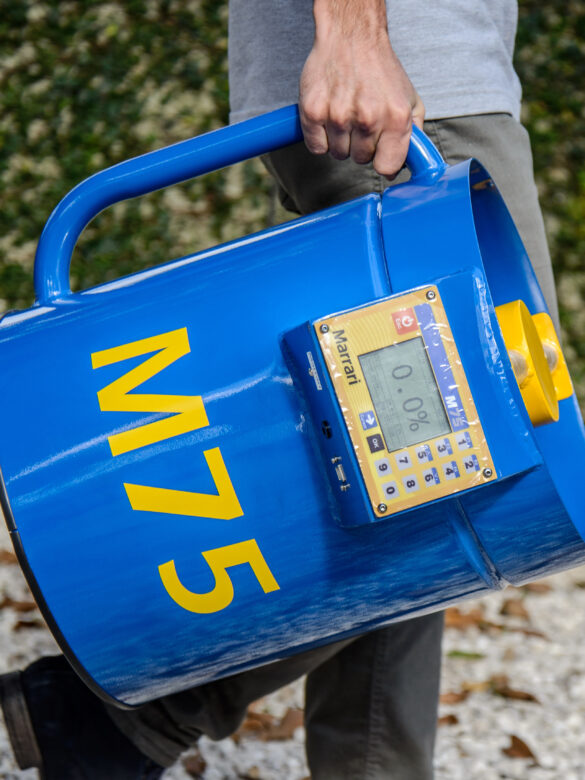
Biomass moisture meters are key because they measure moisture accurately throughout the process. They use different techniques, such as electrical impedance measurement or near-infrared analysis, to determine the moisture content of wood chips and firewood.
By monitoring moisture continuously and providing real-time feedback, they let operations adjust process parameters to keep moisture within ideal limits.
Tangible benefits
- Better efficiency: by keeping moisture at ideal levels, meters help optimize drying and combustion, cutting production time and energy use.
- Higher product quality: the right moisture is essential for consistent, high-quality fuel and helps prevent mold and material decay.
- Regulatory compliance: biomass quality rules and standards vary by region and end use. Moisture meters provide a reliable way to confirm products meet these requirements and avoid fines and penalties.
Watch our engineer Elisa Goltz, MSc, talk about moisture meters (video in Portuguese):

Applications and industries that benefit
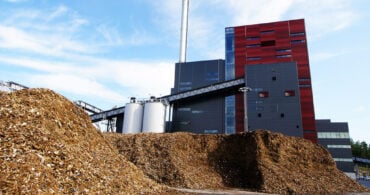
Biomass moisture meters have a wide range of applications in industries including energy, agriculture and food. In power generation, they ensure wood chips and firewood meet moisture requirements for efficient combustion in biomass plants.
In agriculture, they monitor the moisture of residues such as straw and sugarcane bagasse, often used as biomass. In the food industry, they check the moisture of ingredients such as grain and bran used in animal feed production.
Conclusion
Investing in biomass moisture meters is key for companies that want to maximize efficiency and quality. By keeping moisture within ideal limits, these tools are fundamental to producing high-grade biomass and contribute to the success and competitiveness of many industries.
With accurate, real-time measurements, biomass moisture meters are indispensable for reaching the highest quality and efficiency standards in biomass production.
Most importantly: get a free biomass assessment
Marrari offers a free assessment for companies that generate power and steam from biomass, showing how to use it as efficiently and economically as possible, with solutions, methods and ideas to improve your process.
Want to apply this in your plant?
Talk to a Marrari specialist on WhatsApp to book your assessment or see the right solution for your process.