

Why measure cotton moisture? Accurate moisture measurement is a key factor at every stage of the cotton supply chain, from harvest to final storage. Proper moisture control not only protects product quality but also optimizes industrial processes and prevents significant losses. Moisture directly affects fiber preservation, processing yield and the economics of cotton for growers and the textile industry.
How moisture affects harvesting
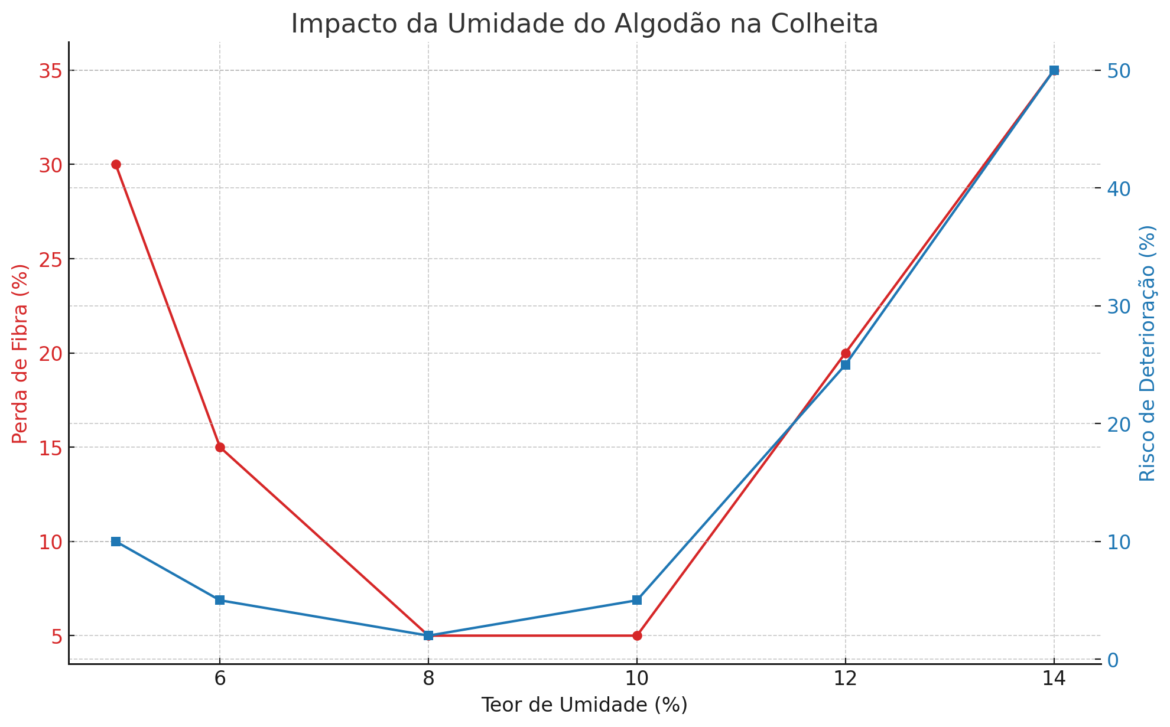
At harvest, the question “why measure cotton moisture?” matters more than ever, and seed cotton moisture must be closely monitored. Harvesting at high moisture can degrade the fiber and encourage microbial growth and fermentation. The usual recommendation is not to harvest seed cotton above 12% moisture (wet basis), with 6% to 8% considered the ideal range.
Below 6% moisture, cotton can become brittle, leading to fiber losses during processing. Above 12%, the risk of excessive compaction rises, restricting airflow in modules and bales and promoting fiber deterioration.
Chart 1: Impact of cotton moisture at harvest
Ginning and fiber quality
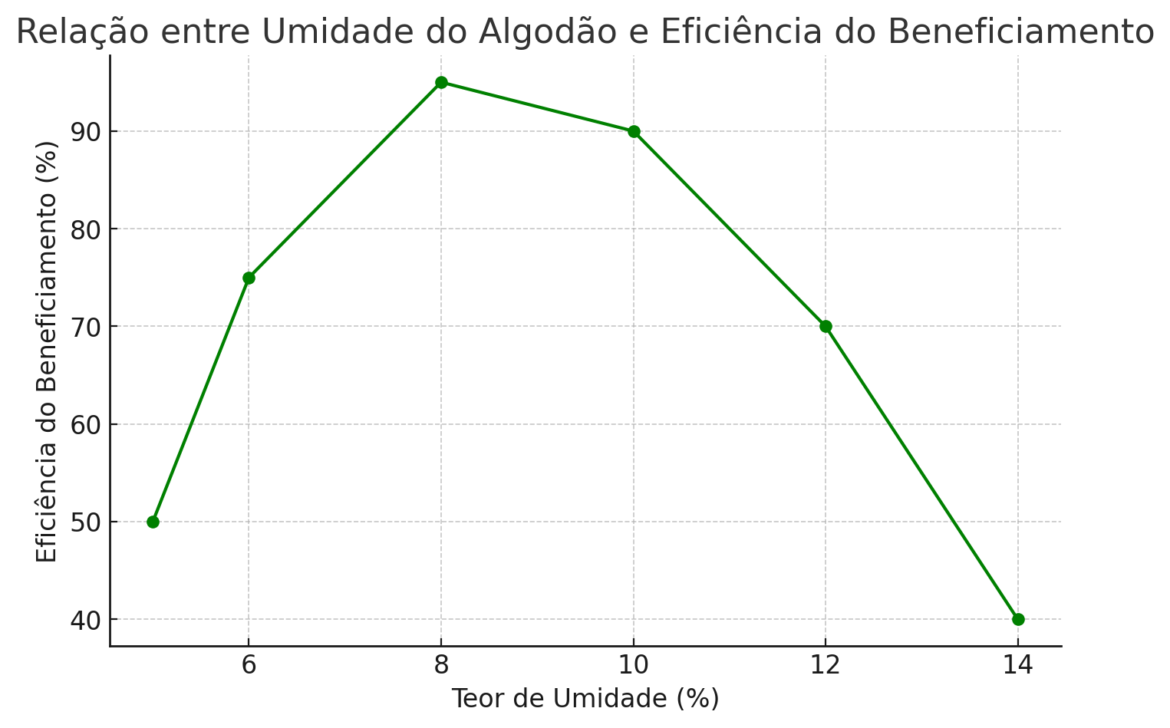
During ginning, cotton moisture directly affects machine efficiency and final product quality. Overly dry cotton can cause excessive fiber breakage, lowering its market value. Overly wet cotton can choke the machines, increasing energy use and reducing ginning efficiency.
Improper moisture can also hurt cotton grading. Buyers and international markets tend to penalize lots with excess moisture because of the risk of degradation during storage and transport.
Chart 2: Cotton moisture and ginning efficiency
Storage and quality preservation
After ginning, lint must be stored at controlled moisture to prevent deterioration. Moisture above 7.5% can cause internal heating in bales and encourage mold and bacteria. This damages fiber quality and can lead to considerable losses for growers.
To avoid these problems, it always pays to ask “why measure cotton moisture?” and to measure it regularly throughout production and storage. Modern moisture sensors allow real-time monitoring and immediate adjustments to keep moisture within the ideal range.
Moisture measurement technologies for cotton
Technology has advanced considerably, allowing increasingly accurate cotton moisture measurement. Advanced electronic sensors deliver fast, reliable readings so growers and processors can adjust their processes efficiently. The main measurement methods include:
- Capacitive sensors: used to measure moisture on conveyors, in gins and at other key points of the process.
- Portable meters: allow quick measurements in the field or warehouse, helping control moisture when cotton is received.
- Microwave sensors: a more advanced technology for accurate real-time measurement, used in automated industrial control systems.
Benefits of measuring cotton moisture
Measuring cotton moisture benefits the whole supply chain, from growers to the textile industry. The main advantages include:
- Fewer losses: prevents fiber deterioration and mold growth, making better use of the crop.
- Better operating efficiency: cotton is processed at the ideal moisture, avoiding chokes and reducing energy use.
- Higher final product quality: cotton with controlled moisture keeps its physical properties and grades better.
- Compliance with trade standards: avoids penalties and eases exports to markets that require strict moisture control.
- Optimized storage: bales do not degrade over time, preserving the fiber’s market value.
Marrari innovation in cotton moisture measurement
Marrari is always at the forefront of measurement and industrial automation technology. The company closely follows the needs of the cotton industry and develops moisture measurement solutions for this application, focused on accurate, reliable readings for growers, gins and the textile industry.
Conclusion
Measuring and controlling cotton moisture is essential to ensure final product quality, optimize industrial processes and avoid economic losses. Investing in suitable measurement technology and following best practices at each production stage are key for growers and processors to deliver high-quality, competitive cotton.
Marrari offers advanced moisture measurement solutions with precision and reliability at every stage of the supply chain. Contact us to learn about our solutions and improve the efficiency of your process.
Click below to see all Marrari solutions for the grain and seed market:
Want to apply this in your plant?
Talk to a Marrari specialist on WhatsApp or see the right solution for your process.