
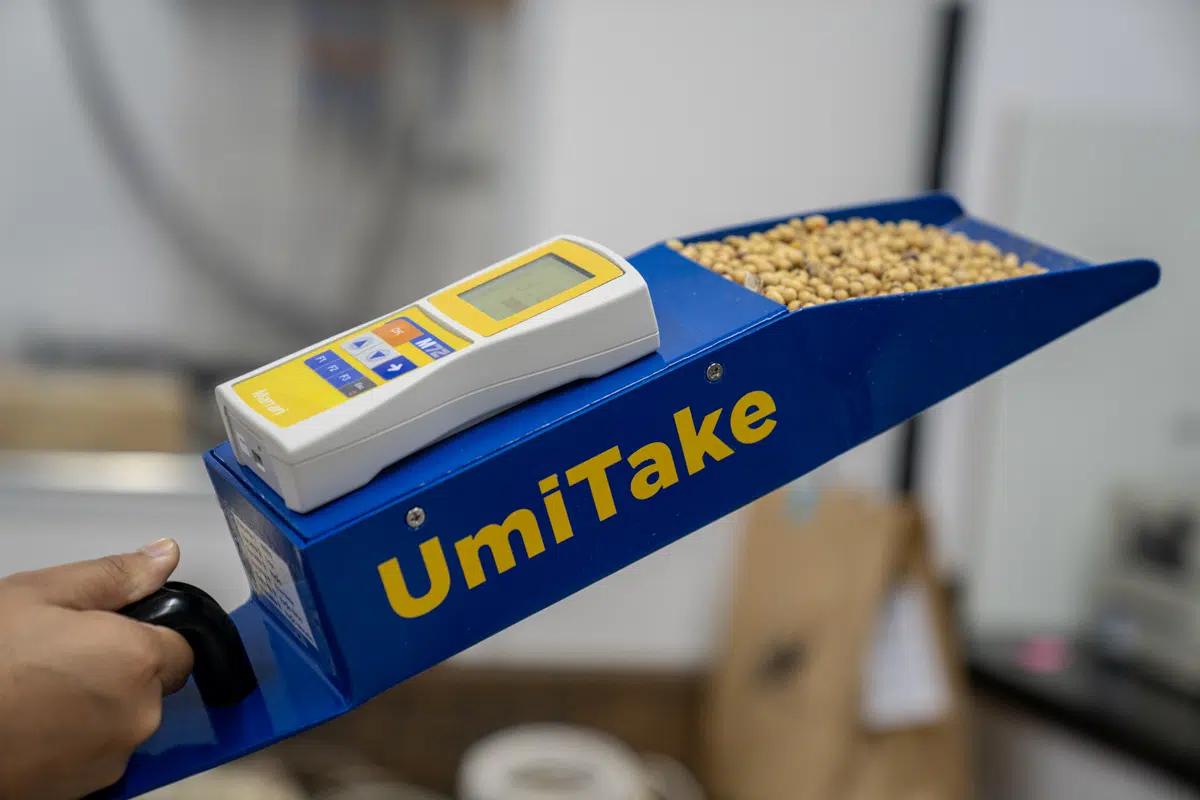
Accurate grain moisture measurement is a critical factor in agribusiness, directly affecting quality, storage and shelf life. As quality control and logistics demands have grown, portable grain moisture meters have become practical, efficient tools that let technicians and engineers get results in the field. In this article, we look at the benefits of a portable grain moisture meter and the reasons to adopt one.
Why measure grain moisture?
Moisture directly affects grain quality. Improper levels can cause spoilage and the growth of mold and mycotoxins, compromising the safety and integrity of the supply chain. Excess water in stored grain also causes dry matter loss and lowers its sale value. Accurate moisture measurement is therefore crucial not only to avoid losses but also to optimize drying, storage and transport.
Why moisture measurement matters for grain quality
Accurate moisture control is one of the main challenges in grain handling. Grain stored at the wrong moisture is prone to mold growth, weight loss and nutrient degradation. The table below compares the right moisture content for different grains with the effects of excess moisture:
| Grain | Ideal moisture (%) | Effect of excess moisture |
|---|---|---|
| Corn | 13 – 14 | Mold growth and quality loss |
| Soybean | 11 – 12 | Fermentation, discoloration |
| Wheat | 12 | Mold and protein degradation |
The table shows that small deviations can sharply affect quality and market value, underlining the need for strict, efficient control in the field.
Advantages of a portable grain moisture meter
Traditional moisture meters require samples to be taken to a laboratory or fixed station, which makes the process slow and sometimes inefficient, especially on large farms or in hard-to-reach locations. A portable grain moisture meter, by contrast, allows measurements in the field and fast, accurate decisions.
Examples and comparisons
Consider two scenarios:
- With a traditional meter: during the soybean harvest, the operator takes samples to the lab. The process takes about an hour on average, while harvesting stops or continues without up-to-date data.
- With a portable meter (such as UmiTake): the operator measures right at the harvest. In under 5 minutes, they check soybean moisture across several areas of the field and adjust drying and transport in real time.
These scenarios show that a portable meter greatly improves decision-making, with more accuracy and less waste. A device that delivers fast, reliable readings makes the operation more efficient and competitive.
The evolution of moisture meters: portability and precision
Moisture meters used to be fixed equipment in laboratories or quality centers, which limited field use and delayed results. With portable grain moisture meters, measurements can be made practically and accurately right where the grain is harvested or stored. This mobility speeds up quality control and reduces errors, since the analysis happens at the right moment and without intermediaries.
Portable grain moisture meter advantages
UmiTake was designed for the needs of the grain and seed industry, with technical features that outperform conventional models. Key advantages include:
- Portability and convenience: UmiTake is light, compact and ergonomic, easy to carry and use anywhere from the farm to the warehouse. Operators can check moisture quickly without sending samples to a lab.
- High accuracy and reliability: with high-precision sensors, UmiTake delivers exact readings and adapts to different grains and granular materials. This accuracy is key to avoiding errors and ensuring data quality.
- Data storage and calibration: UmiTake stores up to 5,000 readings, so operators can build a record over time for comparison. It also supports material-specific calibration curves for each grain, improving accuracy and easing integration with quality control systems.


Practical example: economic impact of reducing grain losses
Suppose UmiTake is used to monitor corn moisture at a grain drying plant.
In this example, the grower checked moisture daily and adjusted drying accordingly, significantly reducing losses from grain degradation. That means saved resources and higher profitability, since properly dried grain is worth more and keeps longer.
Comparison: benchtop meter vs. portable grain moisture meter
| Feature | Benchtop meter | UmiTake portable meter |
|---|---|---|
| Mobility | Limited | High (direct use in the field) |
| Time to result | Medium | Fast (real time) |
| Sample transport needed | Yes | No |
| Data storage | Depends on infrastructure | Up to 5,000 readings |
| Ease of use | Moderate | High (intuitive interface) |
The comparison shows that a portable grain moisture meter such as UmiTake adds speed, convenience and reliability without sacrificing the accuracy quality control requires.
Conclusion
Using a portable grain moisture meter transforms how agribusiness handles quality control and optimizes storage and transport. Equipment such as Marrari Automação’s UmiTake offers clear advantages over traditional methods, allowing measurements at the right place and time. With high accuracy, ease of use and data storage, UmiTake is a complete solution for measuring moisture in grain and granulates, helping preserve and add value to the final product.
Adopting a portable grain moisture meter like UmiTake can bring major gains in savings and efficiency, meeting growing market demand for portable, accurate and reliable technology.
Want to apply this in your plant?
Talk to a Marrari specialist on WhatsApp or see the right solution for your process.


