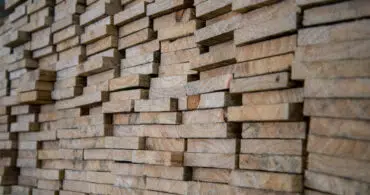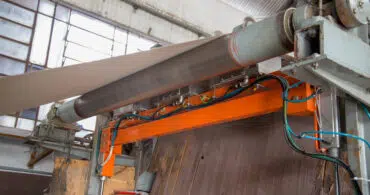
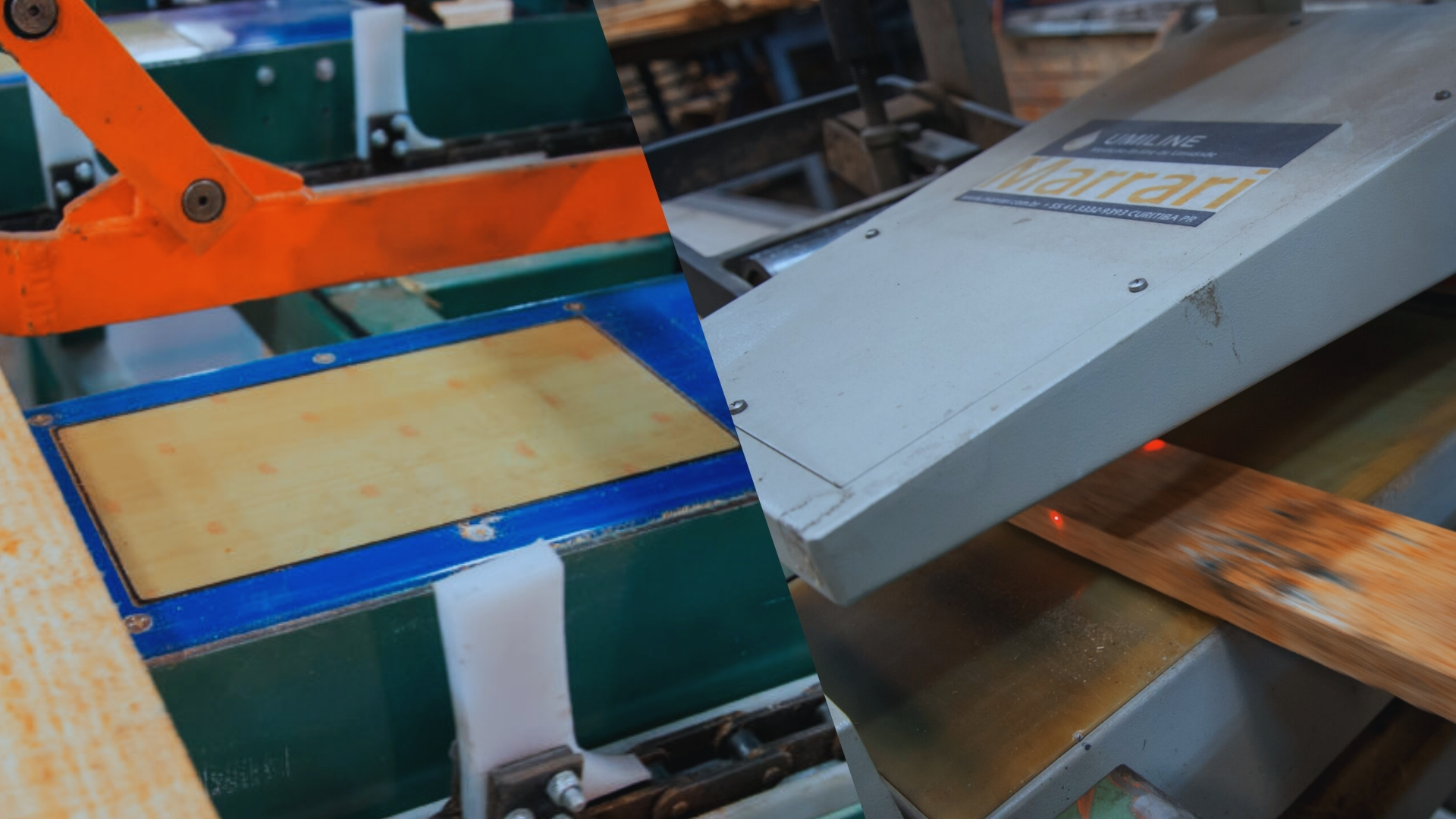
A batch leaves the kiln looking perfect. Weeks later, it comes back as a complaint: it checked, warped or split when it was planed. In most cases, nobody was careless. The mistake is that lumber moisture content was only checked at a few points and at a few moments, never board by board, all the time.
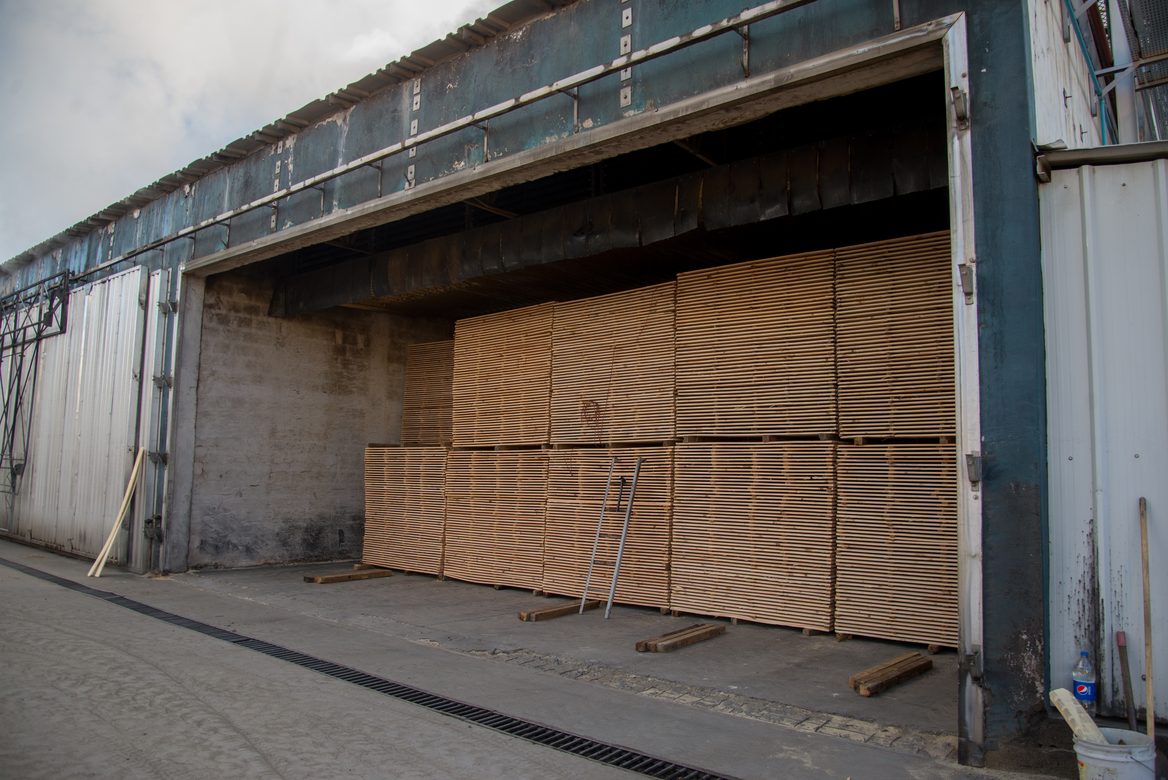
What lumber moisture content is and why it decides everything
Moisture content is the amount of water in a piece of wood, expressed as a percentage of its own oven-dry weight [1]. A living tree can hold anywhere from 35% to more than 200% moisture, depending on the species. Water loss starts as soon as the tree is felled and continues throughout sawing and processing [1].
There is a critical point in this process: the fiber saturation point (FSP), when all the free water has left the wood but the cell walls are still saturated. For most commercial species, FSP lies between 22% and 30%, and the industry usually uses 30% as a practical reference [1]. Below that point, wood really starts to shrink, and lumber moisture content stops being just a quality control number and becomes a real defect risk.
How sawmills measure lumber moisture today
The industry relies on two main methods. Both share one limitation: they measure a fraction of production, not all of it.
Oven-dry (gravimetric) method. This is the reference method. A sample is cut from the board, weighed, dried in an oven at 103 °C ± 2 °C until its weight stops changing, and moisture content is calculated from the difference between the initial and dry weight [1]. It is accurate but slow. Weighing to constant mass can take days, which rules out real-time decisions on the production line.
Portable electric meter. This is the most widely used instrument on the shop floor. It relies on the wood’s electrical resistance and is most accurate in the 7% to 30% moisture range [1]. The operator drives the meter’s pins into the board and the display gives an immediate reading, board by board, manually, point by point. See also our portable moisture meters for spot checks, and learn why you should avoid measuring on knots and cracks.
To track a whole stack during drying, the recommended practice is to choose representative sample boards, weigh them periodically and calculate the stack’s moisture from their average, usually at least three per stack [1]. Even well-run manual monitoring depends on sampling and on an experienced operator deciding, from a few data points, whether the whole batch is ready.
The limits of the traditional method
This way of working is not wrong; it has been the most practical option for decades. But it has three limitations that weigh more and more as production grows in volume and speed.
Partial coverage: three samples stand in for an entire stack. If the stack’s real variation is wider than that of the chosen samples, the deviation goes unnoticed until shipping.
Operator dependence: reading quality depends on who is measuring, when they measure and how many boards they decide to check. There is no automatic standardization across shifts or operators.
Late feedback: between the measurement and the decision to reprocess or reject, the batch has already moved several steps down the line. Rework costs more at that point than it would if caught right away.
A field study of structural lumber sold in Brazil’s Federal District shows this risk in practice. The average moisture content measured was 13.4%, within the expected range, but 20% of the boards were outside the acceptable range [2]. The average hid the problem; the individual board did not.
The commercial cost of getting it wrong
In a survey of companies in the sector, half reported having received customer complaints about sawn lumber, and 58% of those complaints concerned inaccurate dimensions and sizing [2], a category that goes hand in hand with poor lumber moisture control.
Checks and warping: the defects sampling does not catch in time
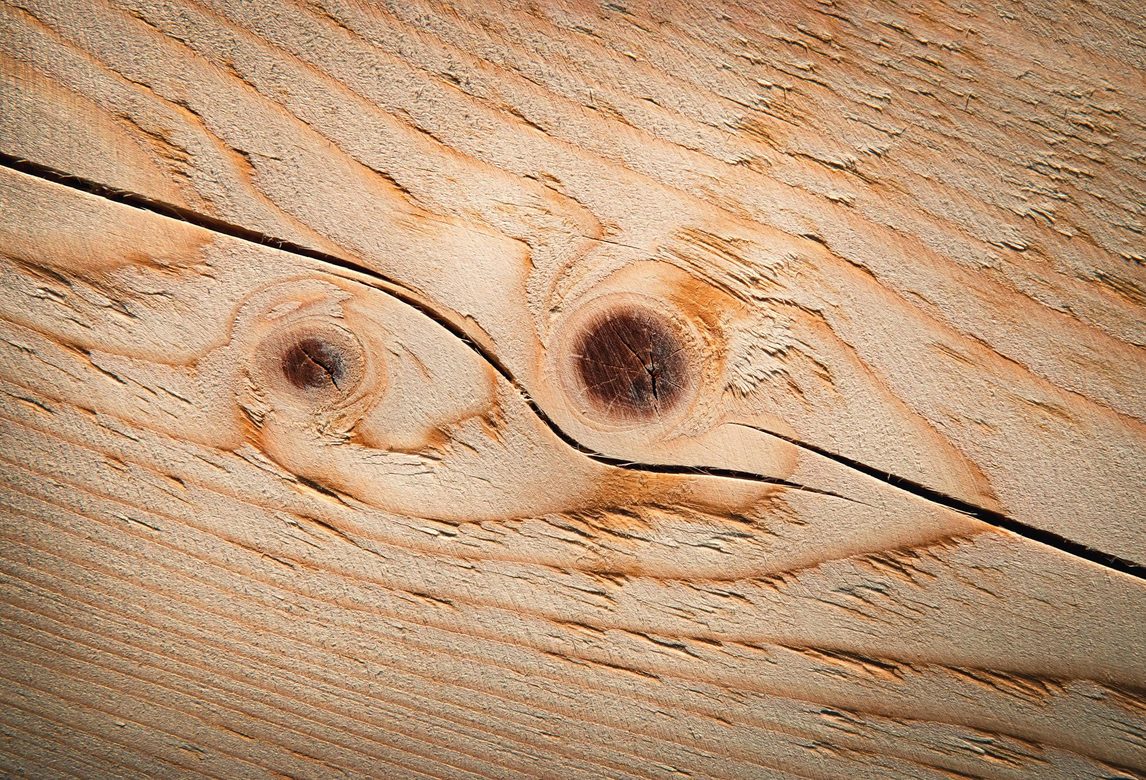
End checks occur because board ends dry faster than the rest of the piece. They shrink first and, since the rest does not keep up, the fibers break under stress [1]. Moisture differences between the surface and the core also cause case hardening, which can be checked in practice with the prong test [1].
There are five common forms of warp: cup, bow, crook, twist and diamonding. Each follows a different pattern of uneven shrinkage as the wood dries [1]. Cupping, for example, happens because shrinkage parallel to the growth rings is greater than across them, and it is most common in flat-sawn boards [1]. None of these defects appears all at once. They develop over the process, in the gap between one spot measurement and the next.
Recommended lumber moisture content by product
Technical reference compiled by Brazil’s Forest Products Laboratory (IBDF), based on Ponce & Watai (1985) [1].
| Product | Recommended final moisture content |
|---|---|
| Commercial sawn lumber | 16% to 20% |
| Lumber for exterior construction | 12% to 18% |
| Lumber for interior construction | 8% to 11% |
| Indoor furniture | 6% to 10% |
| Outdoor furniture | 12% to 16% |
| Packaging (crates) | 12% to 16% |
| Panels (plywood, particleboard, laminated) | 6% to 8% |
In Brazil, standard NBR 7190-1:2022, which replaced the 1997 version [4], keeps 12% as the standard reference condition for strength and stiffness properties, in what it calls moisture class 1 [5][6]. NBR 16996-1 uses 12% for kiln-dried (KD) lumber and 20% for air-dried (AD) lumber, with a tolerance of up to 2% [3]. For materials other than sawn lumber, see all of Marrari’s in-line moisture measurement solutions.
Comparing methods: manual vs. in-line
| Manual/spot (oven or portable) | In-line (continuous) | |
|---|---|---|
| Production coverage | Sampling | 100% of boards |
| Reading speed | One board at a time, minutes to days | Up to 20 readings per second |
| Deviation detection | After the batch is finished | Board by board, in real time |
| Corrective action | Late | Immediate (automatic rejection) |
| Operator dependence | High | Low |
UmiLine and UmiLine T: an answer to the sampling bottleneck
In-line measurement solves what manual sampling cannot. UmiLine and UmiLine T measure 100% of production, board by board, without stopping the line.
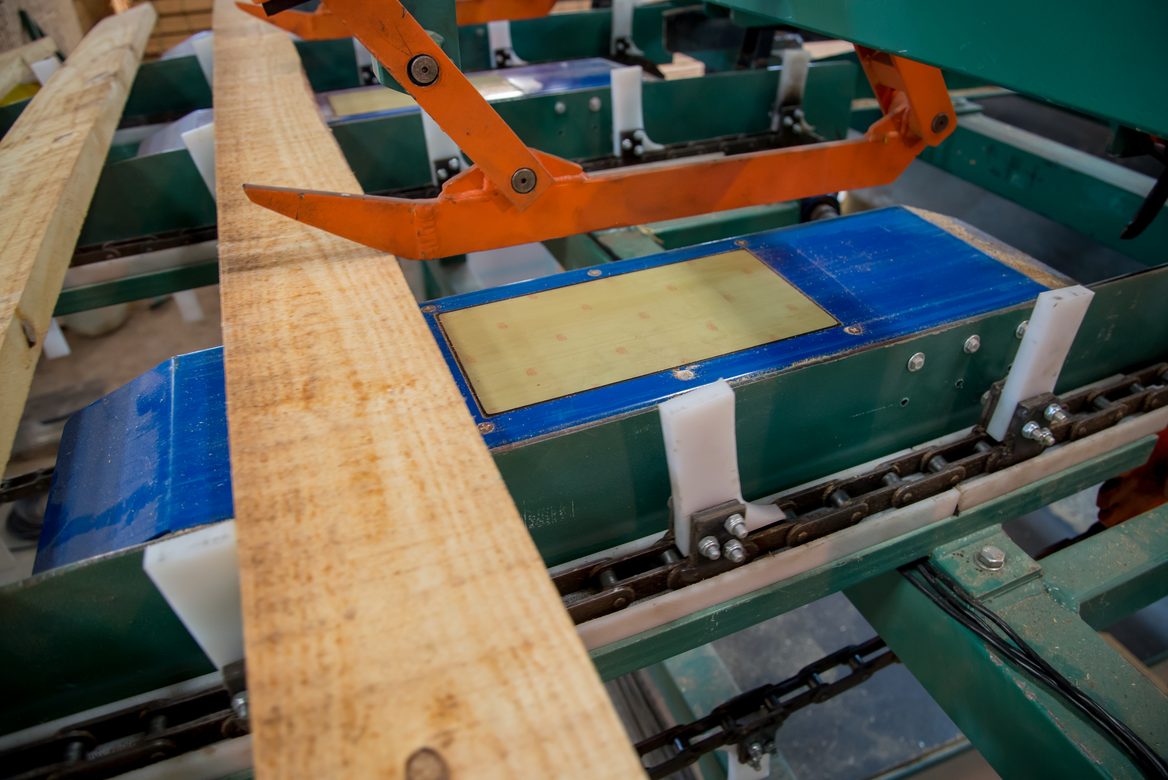
Both systems share the same measurement technology: up to 20 readings per second, automatic width compensation and evaluation by average or maximum value. The real difference is the reading orientation: UmiLine measures boards moving lengthwise, while UmiLine T measures boards moving crosswise. The choice depends on how your line is already set up, not on which one is more accurate. See the technical details of UmiLine and UmiLine T.
| UmiLine | UmiLine T | |
|---|---|---|
| Board movement | Lengthwise | Crosswise |
| Readings per second | Up to 20 | Up to 20 |
| Width compensation | Automatic | Automatic |
| Line modification | Usually not needed | Usually not needed |
| OEE reports | Yes | Yes |
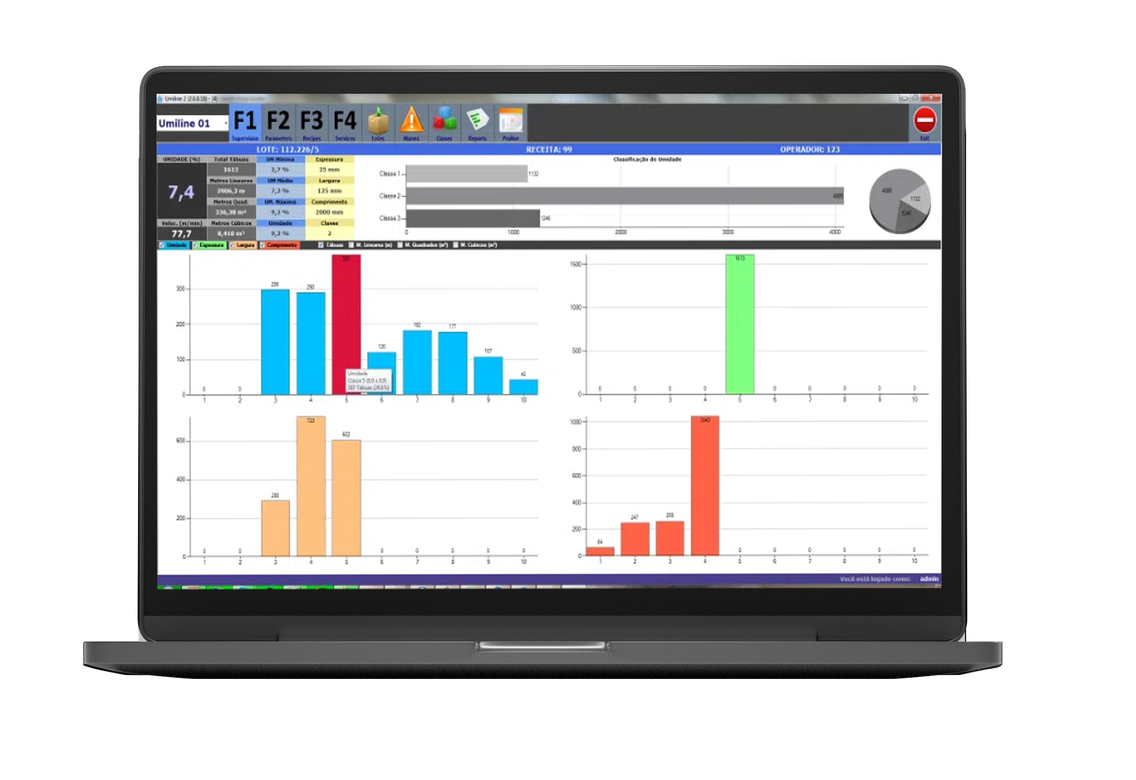
In practice, deviations that today only show up as customer complaints are caught and corrected on the production line itself.
References (in Portuguese)
[1] IBDF/DPq-LPF (Brazilian Forest Service). Secagem de madeira serrada [Drying of sawn lumber]. Brasília, 1988. Available at: https://lpf.florestal.gov.br/pt-br/component/phocadownload/category/2-apostilas-curso-basico-madeiras-e-produtos?download=120%3Asecagem-de-madeira-serrada
[2] Adequação às normas e qualidade da madeira serrada para fins estruturais comercializada no Distrito Federal [Standards compliance and quality of structural lumber sold in the Federal District]. Available at: https://www.researchgate.net/publication/271144585_ADEQUACAO_AS_NORMAS_E_QUALIDADE_DA_MADEIRA_SERRADA_PARA_FINS_ESTRUTURAIS_COMERCIALIZADA_NO_DISTRITO_FEDERAL
[3] Qualidade Online. A qualidade das madeiras serradas de coníferas para a construção civil. Available at: https://qualidadeonline.wordpress.com/2021/10/20/a-qualidade-das-madeiras-serradas-de-coniferas-para-a-construcao-civil/
[4] Blog do Paulinho das Estruturas. NBR 7190:2022 — O que muda com a nova norma de Estruturas de Madeira. Available at: https://blog.paulinhodasestruturas.com/2022/07/31/nbr-71902022-o-que-muda-com-a-nova-norma-de-estruturas-de-madeira/
[5] ABNT NBR 7190-1:2022 — Projeto de estruturas de madeira, Parte 1: Critérios de dimensionamento [Design of timber structures, Part 1].
[6] SlideShare (reproduction of a standard excerpt). ABNT NBR 7190 — Projetos de estrutura de madeira. Available at: https://pt.slideshare.net/slideshow/abnt-nbr-7190-projetos-de-estrutura-de-madeira/23861092
Want to apply this in your plant?
Talk to a Marrari specialist on WhatsApp or see the right solution for your process.